Amanda Kovattana

Middle-aged musings in interesting times

Saturday, September 10, 2022

Thailand: My Covid Report

After two years of being confined to the United States, I was relieved to finally be able to return to my home country of Thailand for a different perspective. I had been relying on this outside perspective to keep me sane during the Trump years, but once Covid hit I was stuck here with the fear. Luckily I had just returned from Thailand just before lockdown, in February of 2020, where I had already experienced life under Covid and found things to be orderly and well run with no panic buying and an acceptance of precautions as the natural course of things. After all, they had been through SARS and Bird Flu. The government had turned all decisions over to the Ministry of Health so there was a minimum of politicizing. Thailand followed what its neighboring countries were doing while working with other doctors internationally towards finding effective treatments. 

I was curious to know how my family and many friends in Thailand had experienced the pandemic. I asked everyone about their Covid-19 experience, if they were vaccinated and how they had treated their Covid case once they got it, as most everyone of my two dozen contacts had gotten it. The variety of answers I received made Thailand and its expat community look like the Cantina in Star Wars, so filled with all manner of perspectives and a variety of sources of information all mingling together in peace as befitting a cross-roads community of planetary relationships. These photos from the airport in Bangkok also tell a story. One that indicated a shift away from Western medicine. 

Gift Packs of Thai Herbal Medicines
Thailand had reported the first case of Covid outside of China; yet its death rate is one seventh that of the U.S. It is now 29th in numbers of deaths per capita in the world, with the U.S. being number one. Thailand had several lockdown protocols and a 14 day quarantine period for entry into the country and even between regions. Quarantine was reduced to three days, then lifted entirely by November of 2021 with proof of vaccination or a negative Covid test within 72 hours of arrival.

Although slow to roll out the vaccine, Thailand now has 76.5% of the population fully vaccinated and vaccination or a Covid test is required for entry. (I showed my vaccine passport at SFO before boarding my flight.) There were four vaccines offered—two Chinese ones, a British-Swedish one and Pfizer. 


Five of my contacts had refused the vaccine, firmly believing that it had potential to do harm because the technology was so new, and so few clinical trials had been done. They were smart people who had developed health regimes as part of their lifestyle. One elder expat, who found Al Jezeerra to be the best source of news, found an older flu vaccine to take that was seen to have worked with Covid. She had a mild case, once infected, and was soon over it.


Another unvaccinated, who already had an autoimmune disease, had the worse case of all my friends as it impacted her intestinal system. She followed the protocol developed by a doctor in India and took a course of Ivermectin to reduce inflammation. She recovered in due time. My cousin and her two sons, were all not vaccinated. They got a mild case of Covid and she presumably used her skills in energy medicine to treat it. Her boys tested negative in 3 days. Another friend not vaccinated got it and was over it with no special treatment in a week or so.


None who refused the vaccine were closeted about their status as this was not considered a heretical stance to take, nor were they accused of betraying the common good. The vaccine did not, after all, prevent transmission, so logically made no difference to the common good. Nor did not being vaccinated result in more people being hospitalized because doctors in Thailand urged early treatment before the body could escalate to the crisis stage requiring ventilators et al. This was also the case in many other non-first world countries.


Doctors treating Covid around the world were sharing information uploaded to an international site. They were using every medicine available to them. Ivermectin being the cheapest and most available followed by hydroxychloraquine sulfate, both used to fight malaria in hot countries. These medicines were so widely used in Africa that it was thought to be the reason why deaths were so low there. I had already perused such a site and my friends in Thailand also knew about this sharing of information. While in the U.S. it was adamantly claimed that there were no treatments available until the new Remdesivir drug came out.


Fah-Talai-Jone
An expat friend from England treated herself and her husband with the ancient Thai herbal remedy Fah-talai-jone when they got Covid. 

This herbal medicine is listed with the Ministry of Health as an official treatment for Covid 19 in Thailand. It is a very old traditional herbal medicine. "It cures anything," said my friend.


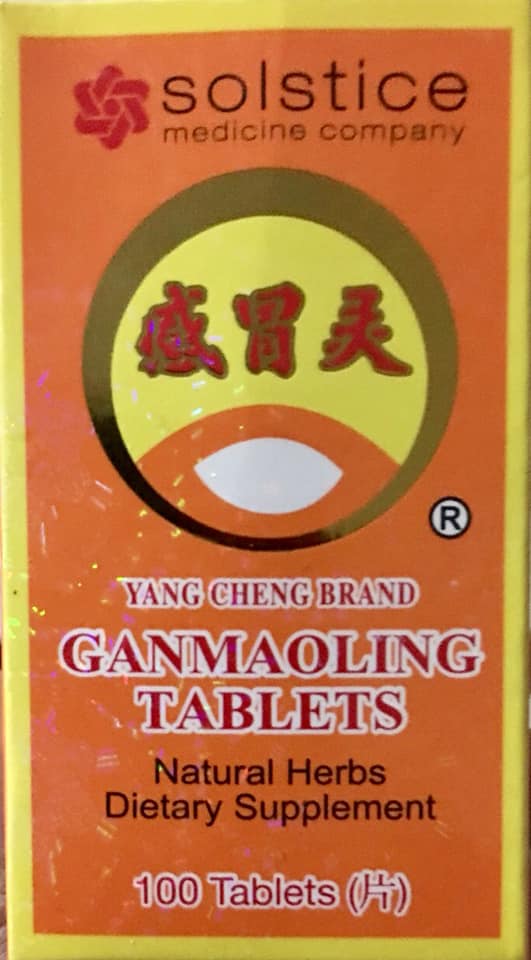
A Thai friend posted on FB that she was in quarantine because her partner had it and she was boosting her immune system with the Chinese herb Ganmoeling which she instructed me could be found in San Francisco’s Chinatown on Clement or Irving street. She posted her negative tests every few days. Few of my friends in California spoke of boosting their immune system. Few talked at all about methods to keep in good health. I was beginning to suspect that the entire American population had immune systems that sucked and said as much to an elder friend who had closely followed the CDC recommendations. He did not believe that vitamins were a proven health strategy and seemed to have few remedies for the common cold. He suffered badly from any flu that came around and would urge me to get a flu shot whenever one hit. I was not in the habit of getting flu shots at all and rarely got sick.


I did visit one expat couple in Thailand who had not had Covid. They were isolated in their condo outside of Bangkok at a beach town. Both had taken the vaccine. My friend of the couple, an American and her Canadian husband, both felt the vaccine was the way to go, much like my mates at home. My friend did concede that she took Quinine as an immune booster which I hadn't heard of anyone doing, but later found that it was recommended by doctors internationally as an effective immune booster against Covid as was vitamin C, D and other supplements.


The vaccine was offered to those who wanted it. Those of my Thai friends who were largely Western educated had readily accepted the vaccine as did their staff. Except for my cousin of the energy medicine training in Reiki. She felt that those who did take the vaccine were doing so out of fear, rather than seeking natural body affirming, healthy living strategies. Her brother had taken the vaccine, but upon relating his sister's experience seemed both impressed and mystified by her success with her energy medicine methods. Nor did he feel he had to state why he had taken the vaccine. 


There were no vaccine mandates. Thais believe that masks more prevent transmission. Those in my household wore masks when they approached me indoors and in the car with me. Masks were still mandated inside public buildings and recommended on public transport. They were surprised that I had not yet caught Covid and considered this status rare.


At the airport while waiting to fly to Taipei, I saw two duty free stores I had not seen before, both selling herbal remedies of all kinds, mostly made in Thailand. Gift packs even. Thailand has seen a renaissance in its herbal medicine practice, having shaken off being enamored of Western medicine and its pills. Such American drugs were offered for sale in Thailand below what we would pay for them in the US. I found this out when my mother went to buy her blood pressure medicine at the local pharmacy during one trip.

Positioned between two world powers, Thailand already has its own Chinese community concentrated in Bangkok. Enough to make bridging with China a natural fit. While the enticements of the West are already firmly established in multiple food franchises and shopping enticements. The technology of both were readily available.


My contacts in Thailand often ask me to bring them certain supplements and vitamins. My energy medicine cousin liked products offered by an American doctor practicing oxygen medicine. On this trip, due to a mistaken double order, I was carrying over $800 worth of two products, one to detox the body and one to energize it with amino acids, though I did not realize it until I saw a bill in the packing slip. 

I, too, have my health regimes and returned unscathed by the virus.


Labels: , , , ,

Friday, August 15, 2014

The Boot Making Cure

In which shoe making and Chinese medicine come together to reveal to me a new perspective on health and resiliency.

On the train to Portland I made shoes. 

"Are trains a way for you to access your subconscious," asked my friend Stacy. I had persuaded her to come along and get a hit of Portland while I was taking a boot making workshop. She was also eager to experience the famous Coast Starlight route. I did love train travel. It was a way to slow life down, feel the full affect of distance and be in motion outside of one's life and those chores which telegraphed me every time I sat down for three minutes. On a twenty hour train ride I had plenty of time to contemplate things. I did think it was possible that the rhythm of the train could put you into a theta state, much as a drumbeat allows the visions in a shamanic journey. I liked to think that JK Rowling had accessed this state when she was on the train where she had dreamed up Harry Potter.

And as I worked on my shoe project (a slip on shoe using bicycle inner tube pieces for trim) I kept seeing myself traveling to make shoes and living on the train, possibly having a shoe workshop on the train. It was such a strong vision I wondered what I was meant to take from it. I felt it so clearly that it seemed a part of my identity, much like making shoes seemed somehow so right, so innate to me. The shoe in my hand made me feel masterful and working with hand tools seemed so familiar. I felt compelled to make things with my hands to fulfill some innate need as primal as eating. Perhaps it was cellular memory passed down from another generation. I asked my mother what profession her grandfather had had for I had heard it mentioned that he was a harness maker. 

"Well it's funny you should ask," said my mother "because my family didn't want me to know. And I was scolded for playing with his tools. I was told not to tell anybody what he did so I thought there was something wrong with him." I reflected on her childhood spent in the north of England in Yorkshire.

Turns out my great grandfather was a horse shoer. And his children were so eager to better themselves that they didn't want to admit that their father did the work of a laborer. I thought it was cool though—an important part of history. I had seen a horse shoer at work. It was such a specialty profession now; they were part of the rich horsey crowd, paid well and in much demand. I knew how to pick up a horses foot and use a pick; like shoe making it was a similar feeling of getting to the bottom of things. I spent time wondering if those who loved to be crafty were expressing similar cellular memories of their ancestors making things by hand.


Healing Cosmology

Recently in the usual serendipitous way of my life I met an acupuncturist who saw me at Walgreen's getting into Catherine's electric car (the new Nissan Leaf) and he walked over to ask me questions about it. I didn't have all the answers so he gave me his card to e-mail him later. The card said that he specialized in ADHD, anxiety and depression. I was very intrigued. Weeks later I found his card still on my desk and contacted him hoping that he might refer some of his ADD clients to me. As it turned out I would be the one doing the referring because my mind was so much clearer after one session I immediately wanted everyone who had any chronic condition to see him, My mother went for her arthritis and so did a client to cut back on pharmaceuticals and her son for his allergies. I ran into the client in his office and she thanked me and told me how much he had done for her migraines. My mother too became so much calmer with the micro current technology he was using. And he told me how the micro currents enhanced serotonin levels. 

"Ah," I said, "so body chemistry can be changed without the use of pharmaceuticals." 

"Oh yes," he agreed, that being the whole point of his career.

After witnessing the assault of chemotherapy on Catherine when she was undergoing treatment for triple negative breast cancer I secretly believed that this poisoning of the body was incredibly wrong and have harbored hostile feelings about Western medicine ever since. (I was already acquainted with alternative medicine through my chiropractor and was intrigued by what he had introduced me to over the years.) During the time of Catherine's treatment I met a woman who had the exact same triple negative breast cancer only she had refused chemotherapy. She had her tumor removed surgically but then went to an acupuncturist to help discover what was putting her body out of balance and she adjusted her lifestyle accordingly. She herself was a Chinese medicine practitioner so she understood and believed in this healing art. I was naturally fascinated by this because here was a woman who had walked away from chemo and survived. All she did was focus on getting more sleep with the help of medicinal marijuana. She also told me that her oncologist had warned her repeatedly that the cancer would return within 18 months if she didn't do chemo so her warning to me was that you had to have great strength of mind to walk away. You literally took your life into your own hands. Which was exactly what I had in mind. I needed a new healing cosmology. (To be fair, Catherine also received acupuncture treatment to help her overcome the effects of chemo and has fully recovered from all her treatments. So these "alternative" medicines were slowly making inroads, but it was a given that only chemotherapy could actually "cure" cancer and I resented that assumption. I felt it stood in the way of progress.)

Dr. Kniskern, was not Chinese; he was a white American in his 50's who had begun his medical education at Stanford medical school (after he already got a degree in psychology and business). Given that the primary treatment tool of Western medicine was pharmaceuticals and after reading down the list of side effects he soon realized that he didn't want to practice medicine by pouring poison into people's bodies. A friend who was in Chinese medicine helped him enroll in another college where he could simultaneously study Chinese medicine. (Stanford, however, warned him sternly against following this practice saying that there were not enough studies to prove that it worked. Never mind that the body itself responded immediately to the techniques and provided a perfect feedback loop.) He graduated and set up his practice using what he learned from both disciplines then continued his education with a degree in nutrition & immunology and one in comparative medicine. Clearly a man in search of answers.

He told me how he had used these tools of Chinese medicine to further develop his own treatment for Aspergers and Autism. Considering the complexity of these conditions I was indeed impressed. No one else had devised much of anything that worked for these kids. He had written a number of papers on his discoveries and treatments but the gate keepers of Western Medicine were so suspicious of such deviation from the norm that they refused to even consider publishing his findings. He was eager to demonstrate how the treatment might help me as I had mentioned that I had issues with high blood sugar. In the first session I could clearly feel the energy pulsing through my body. And what Dr. Kniskern referred to as brain fog was lifted. After a week of treatment my ability to get things done became a staccato military march driving me to tick things off my to-do list just for something to do. No longer did I dither and procrastinate. My mind was beginning to cannibalize my life sucking up my leisure time.

When Dr. Kniskern next looked at my tongue he told me I needed to rest more. Take time out and let your mind wander he said. I had forgotten how to do that. He would also ask me what was stressing me out. Stress he pointed out would raise my blood sugars by using up my available insulin. I did a blood test daily when I woke up just to check if his treatments made any difference. It took a while but after three months my blood sugar levels are now consistently close to normal. After he told me about the impact of stress I began to see patterns. All kinds of things stressed me out including exciting things and what I read on Facebook when I woke up as when my Thai contacts had posted about the political shifts in my home country. What I posted to Facebook myself also had an impact akin to stage fright if something I said or posted was particularly risky. Things that I expected to stress me out did i.e. our renters not paying rent on time, Catherine being mad at me, and me not having enough client work. I discovered too that working with clients was so absorbing (and monetarily rewarding) it actually kept my mind from stressing me out. Shoe making and writing also calmed me.

A friend who follows my various diverse interests told me that Tolstoy had also made shoes having decided that the peasants mental ease was a result of a life of toil and he hoped to counteract his despondency by taking up shoe and boot making as well as farming. I enjoyed thinking of Tolstoy renouncing his aristocratic roots and taking to the fields to toil alongside the peasants while making shoes in his leisure hours. That he was a writer made this exploration even more cogent to my interest. I had taken up shoemaking as an intriguing practical hobby, but making shoes not only fulfilled my appetite to make things with my hands, but kept me in the mental flow state that is said to be the ideal for the creative brain. I felt it strengthened my mind against interruptions and distractions. It was meditative in the sense that thoughts could come and go without attachment.


Where The Shoemaker Lives

To explore the depths of this new craft I was now ready to go to shoe school; they were few and far between and none in California. When I arrived at the shoemaker's house the next morning, I was thrilled to find that his house, too, was of interest with its front yard vegetable garden, rain water catchment system, adobe oven, garage workshop, chicken coop and rabbit hutches all in a space smaller than our own suburban lot. His basement shoemaking workshop sported four different vintage looking leather sewing machines and numerous hand tools slipped into a strip of leather loops nailed to the edge of a shelf full of shoemaking supplies. He had a book case of DIY homesteading books and peak oil books. The posters on the wall were from his gigs as a musician. Like me he was on a path to take life and what sustained life into his own hands.

On the first day of class Jason showed us the five hand tools that were all we needed to make shoes—a pair of scissors, an awl to punch holes, a stitching awl, a skiver to shave off layers of leather and a channel groover to cut a groove in the sole where the uppers would be stitched into. He mentioned putting these tools into a backpack as he travelled. When I asked him later about these travels he said he used to hop freight trains and go to wherever there were art fairs, renaissance fairs or reenactment events where people would buy handmade shoes by artisans. He rode the rails! Now my vision of making shoes on the train made sense. I had been tuning into the traveling shoemaker part of his life. This was so remarkable I told Stacy about it that evening.  

I also asked him how he came to make shoes and he told me he started by repairing his own clothes, so often that the patches upon patches became works of artisanal art. Then he made clothes and learned to tan leather so he made pants from leather. It was only a matter of time before his shoes wore out so he made shoes from the leather too. At first the shoes only lasted a year or so, but bit by bit he learned how to make them last. Eventually he met another shoemaker and hung around at his workshop learning from him. This shoemaker was coincidentally the same man who started the shoe school in Ashland that I visited in Spring—the Bonney & Wills School of Shoemaking & Design. The school was beautifully appointed in a commercial studio full of natural light and a line-up of new looking sewing machines. It cost four times what Jason's workshop did and evoked too much the high end specialty consumer. I preferred the cottage industry feel of Jason's basement workshop tucked into a neighborhood of like minded homesteading neighbors where he made shoes to the sound of chickens using medieval designs that had a home spun ageless quality to them.

I envisioned well fitting shoes that were available to everyone on a localized village level. In Oregon and especially in Portland there were many who shared these off-grid thoughts. But in the Bay Area, the land of high tech and innovation the very idea of making shoes seemed so odd that it stopped people in their tracks. I enjoyed their astonishment. It was anti-consumerist yet the way I was executing designs, my shoes were still a fashion statement. I was wearing my Roman sandals with metallic copper accents that included little Hermes wings on the sides that I made for my travels to Thailand last Spring. They were a big hit and no one once laughed at me for making my own footwear. When he saw them Jason immediately asked who had made them.

My compatriots in boot making class were edgier and younger; one woman sporting scenic tattoos and large gauge ear piercings. A regular do-it yourself crowd—the two men were in the trades and the women well versed in DIY crafts and classes in pioneer skills. Next to them I felt downright mainstream in my wide brimmed white summer hat and a floral print summer shirt I'd made. I looked like I might shop at Nordstroms. I was intrigued by their sense of style as much as by their skill level. Hana (who had the tattoos and piercings) was a hydrologist working for the U.S. Geological Survey and Thadeus our farmer and handyman both made elegant work books of tobacco brown leather that wouldn't stand out. Andy who worked at his parents awning shop picked matt black leather bringing to mind Folsom street leather bars. He then trimmed them in silver grey edging which reminded me of a football team. Sara an art student who designed her own clothes picked the red leather and lined them with apple green. Pictures here.

An entire day was devoted to making our pattern from duct tape casts of our own feet. Another was devoted to cutting out the heavy bison leather and prepping the pieces for assembly. I couldn't believe I spent three hours struggling to skive off the edges of the leather so the seam wouldn't be so bulky. I was hoping I would learn how to minimize my time. I would have given up right there, but it turned out that my tool had a crack in it that made it almost impossible to get it to work even though Jason could manage it. Then the sewing machine ran away with me and I broke a needle. Hand sewing the uppers to the sole in the stitch-under method was also challenging, but I managed a workaround by making the sewing holes slightly larger.

I thought a lot about my design. I too wanted to use the red leather with its richly textured grain. I paired it with the chocolate leather to make a two toned boot like a saddle shoe. Then when I saw some yellow pigskin lining material I could use for piping across the top of the boot it really made the colors pop, while the natural leather of the sole still made it look like a shoe. Once finished with chrome eyelets and brown laces they looked like a real design reminding me of European children's shoes—butch, but playful. And the shape of the wide toe box were so pleasing to my eye that it gave me a curious sense of recognition as if I was seeing my home after a long time away. It was my feet I was seeing reflected in the shape of the shoe.

Jason said that after we had made many pairs of shoes and were practiced in our craft these first pair would look crude. But though the stitching wasn't parallel and the seams were so bulky it looked like I could stand on the edges of the leather, I was awed by how nicely they turned out. This finished pair of boots made by my own hand gave me such satisfaction that I was filled to the brim with happiness and the awesomeness of it all. How was it that this four day accomplishment could be as satisfying as love? I marveled at this feeling of utter happiness having been harvested with my own hands and a few tools as if from the ground itself. 


The Red Shoes

I wore my red shoes to the restaurant where my hosts Don and Jerome took us after class and they were admired by the wait staff. My friends were equally impressed and later Stacy and her partner Peggy also wanted to try them on. There was something about them that compelled people to want to see what they looked like on their own feet. 

A couple of weeks later a masseuse, Catherine's new friend Kyna, came by to give us both massages. As I lay on her table in front of my bookcase she mentioned one of the books on my shelf and how much it had helped her long ago. I asked which story was it that most spoke to her and she said "The Red Shoes". So I took down Women Who Run With The Wolves which I never had the patience for before and read about the little orphan girl who made her own shoes and how she was adopted by a lady in a golden carriage and taught to dress properly and have manners. Turns out the little orphan girl was perfectly happy with her handmade shoes and when they were taken away from her something shut down inside her—the capacity to do things for herself, that wild self sustaining creativity. And out of this "soul famine" she yearned for the red shoes of her past and got herself into trouble with a new pair of red shoes that called out to her and were enchanted so that she eventually went to her death with her obsession with them. This soul famine sounded like something I had tried my damnedest to avoid. And then again maybe not. But I was glad I was again making my own little red shoes.


The handmade life, this off grid attempt to become self sufficient I could see was also a form of mental self-healing just as my acupuncture sessions were making my body quicker to bounce back from stress. The term emotional resiliency comes to mind. Tolstoy was onto something. I let my mind breath in this resiliency and took a mental celebratory pirouette as I contemplated a life prioritized around the things that nourished the soul and healed the body. What a different world that would be.

Labels: , , ,

Tuesday, November 20, 2012

Hang On To Your Fats: Further Travels of the Thin One


In which I stop the progression of my pre-diabetes and discover a whole new world of food as medicine at the Weston Price Foundation conference.


Doctor's Orders

In order to reverse my pre-diabetes diagnosis I had to openly defy my doctor's orders of the previous year to lower my cholesterol. 

"They just can't have it both ways," I said to myself. Between cautionary advice regarding heart disease and my new understanding of the role of carbohydrates in raising blood sugar levels there would be nothing left to eat. This is the realization a diabetic is forced to come to given the parameters of the medical establishment and that is how the pharmaceutical companies get you. They already got us with the fear of cardiac arrest putting so many people on statin drugs. And blood pressure medicine. And Lipitor to lower cholesterol. And Prevacid for heartburn. But I was onto them. I had uncovered the Big Fat Lie. Saturated fats, providing they were derived in nature and not by industrial processes, did not make you fat or cause clogged arteries. And cholesterol was necessary for repair to the body especially for women as they aged. But high insulin; now there was a marker for deteriorating health. Not just diabetes, but high blood pressure and Alzheimer's (which was now known as type 3 diabetes because of the role of insulin). 

My continuing pre-diabetes status would be revealed at my next blood test by the HA1C test. It came back at 5.9 down from 6.0. I had stopped the progression and reversed it, though not by much. I was disappointed given how hard I had worked, but later saw it as a triumph. Considering that I had not yet mastered cortisol levels triggered by flight or flight response, I still had room for improvement. Especially with my public speaking appearances. The three minutes on stage at the conference in Chicago had shot my blood sugar reading 100 points over normal and kept it high most of the weekend. I would learn to master that.

The speed at which I had been reading in the last three months had taken a toll on my sleep patterns too, which hadn't helped. And I had spent so much psychic energy building up my case that I had become argumentative at a drop of the hat. But I had diligently monitored my blood sugars and ferreted out the offending foods—toast, oatmeal, potatoes, and the crust on chicken pot pie that rushed into my veins so quickly I felt slightly drunk. I replaced those foods with daily rations of bacon, eggs and avocado.

My doctor was noticeably impressed by my work with the blood glucose readings and the food diaries. But my cholesterol was indeed high at 243, up from 189.

"Is that what you wanted?" she asked once I had told her why I had taken a high fat approach.

"Yes, yes," I said clapping my hands like a child awaiting a treat. High cholesterol was my act of defiance though it still made me nervous, so intense was the propaganda.

"But your bad cholesterol is high too," she cautioned. The LDL reading was at 133, up from 102. 

"Well, according to my reading," I said prepared for this moment of truth, "there are two parts to the bad cholesterol." I waited for her to get it. She agreed that there was and admitted that there was a test to determine whether it was the big, fluffy LDL that protected the arteries or the small, dense LDL that caused damage to the artery.

"But there's no point to it," she said about the test, "because there is no treatment for high LDL except diet."

"Okay then," I agreed. Diet was, after all, what I was after, not some drug. And so she conceded to prescribe, so that my insurance would pay for it, what I knew to be an expensive test. And would require another fasting blood draw.

The test came back in favor of the fluffy protective LDL and Dr. V wrote me a note that I had made my point, but she was still concerned with other factors of my lipid profile. I did not take the bait. I was done with this battle with conventional medicine. 


Foundation to Preserve the Sacredness of Food

After reading Gary Taubes book Good Calories, Bad Calories, I began to hear references to the Weston A. Price Foundation, first from a breast cancer survivor friend of Catherine's, then in the DVD I bought featuring Gary Taubes and finally on the KQED Health Quest show. Weston Price was the dentist, who went around the world documenting the diets and health of indigenous people. The foundation was set up to preserve his findings. 

As it happened, the annual conference was to be held in Santa Clara, a half hour from home not two months after I discovered them. They had never been to the Bay Area before. This was so fortuitous that I felt giddy with the divine providence of it all. 

The theme of the conference was "Nutrition and Behavior" a rather fitting choice for California's therapy rich culture and would cover ADHD, depression, insomnia and a host of other mental disorders normally relegated to psychology (and often affecting my chronically disorganized clients). 

I enlisted the support of Joan, the breast cancer survivor friend of Catherine's, who was equally interested in attending. We made our way into the crowded Convention Center, squeezing past displays by vendors of natural health products. There were hundreds of people, possibly 800 attendees, mostly women, a bit younger than us looking fit and healthy in a  radiant way. They were also friendly in a family sort of way—the Weston Price family. I was soon to find out that most were practicing nutritionists in a holistic tradition such as Chinese medicine or homeopathy. Also attending were quite a number of psychotherapists, Paleo eaters, an astrologist and a host of farmers and food producers. 

The atmosphere of progressiveness was not unlike Bioneers, the environmental solutions organization in Marin County that Catherine and I attended every year. Except for one thing; it was not dominated by the vegetarian paradigm. The Green Festival, too, had nothing but vegan options in their workshops on food this year. Not a single reference to grass-fed beef being an environmentally tenable solution. This difference at the Weston Price conference created a climate of subversiveness that came up repeatedly in speaker's references to what was held by the public to be healthy, but was understood by the group to fall far short of nourishing and would inevitably lead to failed health. Just the word "low-fat" sent ripples of laughter throughout the room. I laughed too, with relief. It was from one of these speakers that I would learn how coming off a vegetarian diet and onto the Weston Price way of eating would likely send your cholesterol levels high, but it would stabilize over time.


Witches of Health

These were modern witches, I realized. As subject to patriarchal suppression as the midwives and wise women of the 18th century who were burned at the stake, to be replaced by predominantly male, Church sanctioned doctors. There was no need to burn their modern counterparts, though, for it could be taken for granted that there was little chance people would emerge from the low-fat mantra of conventional wisdom long enough to listen to the heretical message of eating a high-fat diet that included red meat. When I first looked at the Weston Price website I thought it was bizarre and queer in a fetishistic sense with all the articles about organ meats and animal fats. But as I became more educated, I was attracted to the very otherness of entering into this world. I was following the path of ancient knowledge. A path that would completely subvert the dominant paradigm of processed foods and factory farmed products.

I, of course, wanted to hear Sally Fallon, the reining goddess of the foundation, though she more reminded me of a head mistress, very calmly presenting what were known facts, had been known for longer than gravity had been discovered so no need to invent new diets when there were tried and true methods of eating throughout the world. Certainly there were differences from culture to culture and individual to individual, but certain facts were universal. Humans were meant to eat what appeared in nature, mostly fats found in animal products, some plants, properly prepared grains and legumes, if available, and little or no sugar in the form of honey and plant syrups. (And no, a vegetarian or vegan indigenous culture had never existed. In fact the more plant based the diet the more cavities and lesser overall health of the population.)

What our industrial food system had done, Sally pointed out, was replace real foods with ersatz foods; foods that had been manipulated by extremes of heat and mechanized processes that so distorted the very molecules of the food that it was no longer recognizable by the body. This included homogenized and pasteurized milk which distorted fat molecules and destroyed beneficial bacteria. Low fat and non fat milk was even worse being ultra-pasteurized. And breakfast cereal was extruded through a machine at such high pressure it rearranged the protein bonds. And factory farmed, nutrient depleted grains stuffed with gluten, causing celiac disease, as referenced in the book Wheat Belly, now a New York Times bestseller. What we once thought of as nutrtitious building blocks of the body, could not be used properly and ended up as unwanted deposits that would cause joint pain, autoimmune diseases, allergies or gastrointestinal disorders. The body no longer recognized what was friend or foe and was attacking these foods and itself. No wonder GMO's were so dangerous. It would just further this process of making foods unrecognizable to the body. 

It was this unmasking of the food industry that probably gave the Weston Price Foundation the reputation of being extremists, so threatening was it to industrial food suppliers. Weston Price scientists were accused of having far fetched ideas, though they had revealed the dangers of trans fat, long before anyone else realized and were now emphasizing the dangers of polyunsaturated fats. Not to mention the even more contentious subject of unsafe soy—soy that was not prepared in the traditional manner through fermentation to neutralize the harmful phytates and trypsin inhibitors.

Practically speaking the Foundation's approach was extreme simply because, in order to eat in this traditional manner, you would very likely have to cook everything from scratch. Such home making skills had begun to disappear from American society just about the time that Home Economics was no longer offered as a degree in college, taking with it the nutrition science behind the cooking skills. 

It was the mission of the foundation, Sally told us, to make sure that young women who would become mothers had enough knowledge to support good nutrition in themselves and their children. Otherwise, she feared, it would be too late. Entire generations would be born unable to fend off the slightest pathogen and burdened with a long list of allergies. Not to mention being cranky, depressed and mentally unteachable.

One of the first observations of Weston Price, the dentist, was that good nutrition resulted in happy, easy going people. His photos often showed people laughing. He made the point that healthy eating was the key to full expression of one's genetic heritage. Thus the women were beautiful with high cheekbones, the men strong with noble faces and the children content, alert and well behaved. They also had perfect teeth without the benefit of either dental care or doctors. He also had pictures of the same tribal people after they had been exposed to modern diets of refined flour and sugar. Their faces had narrowed, their jaws crowding the teeth which were grown in crooked, their demeanor troubled. This was the proof of the pudding as it were. Too much pudding. But the medical establishment put the findings of a dentist and likewise anthropology somewhere so out in left field it was probably viewed more as a quaint hobby, much like history and literature. 

I already knew that Shamans had brought forth the knowledge of healing plant medicine from communication with the plant spirits themselves; they likely had done the same for the health supporting effects of food. Which would account for how each tribe had their sacred food as Sally was describing. For the little Swiss village isolated in the mountains it was the first butter of Spring, when the cows were returned to pasture after wintering on hay.


Good Bugs, Bad Bugs

Internal medicine, by its own admission, was all about bugs and drugs. The body as an entity to be defended from terrorist pathogens with increasingly high tech weapons and the sterilizing of food. Western medicine was to the body what the military was to diplomacy, competent in meeting its objectives, but in an extremely destructive way full of unintended consequences. 

In the world of Western Price, the body was an organism that was host to billions of micro organisms and the key to health was to boost immunity by keeping good relations with these beneficial bacteria and exposing them to a broad range of more good bacteria. It was also important to insure lots of fat intake to keep the body in good repair. Sally told us she ate 70% of her calories in fats. Her picture of half a stick of butter on a short stack of pancakes made us laugh. 

Indigenous people ate animals in reverse order to modern people we learned. The muscle meat we moderns were so fond of was left until last and often fed to the dogs. The most important part of the animal was the head, the internal organs and the bones. This was the world of bone broths and liver for strong bones and cell structure, while fermented vegetables and raw milk provided good bacteria. Probiotics was the word of the day.


Hang On To Your Fats

A colleague introduced me to raw milk a few weeks before I got to the conference. She told me how, even though I was lactose intolerant I might very well be able to consume raw milk just fine, because the enzyme lactase is destroyed by pasteurization and this is the very enzyme needed to help digest the lactose sugars in milk. Thus raw milk helped you digest it. How brilliant is that? That unpasteurized milk was known for food born pathogens like e-coli made me slightly nervous, so she went with me to Rainbow Grocery to help me buy my first pint of whole fat, raw milk. It was deliciously sweet and full bodied. She also recommended the book The Raw Milk Revolution: Behind America's Emerging Battle Over Food Rights, in which an investigative journalist ferrets out the real story behind the harassment of raw milk suppliers. Now I drank my raw milk with impunity as an activist supporting food rights, but I was also curious to see what health benefits it might offer. And yes, it did not give me gas like regular milk did. 

Raw milk enthusiasts claimed that it cured asthma, Asperger's symptoms, ADHD, sent cancer into remission and fixed digestion problems. Like good chicken broth it had the power to boost the immune system and fight off colds. The connection between raw milk and less asthma in children had been documented, but science on the whole, was bent to serve the bias against raw milk and other unpasteurized foods. I recalled from earlier readings on globalization how Raj Patel, in his book Stuffed and Starved, had pointed out that the most profit to be had in the food supply was at the point where it went through the most expensive processing because of the industrial machinery involved. Farmers couldn't afford such machinery, but investors could profit intensely from owning such machines. Unpasteurized foods meant more direct access to farmers and like the Church and God, it simply wouldn't do to make it so easy for ordinary people to have such access to fresh foods or the Divine. It cut out the profits of the middle man and diminished the self-importance of the medical establishment and its dogma against pathogens. Destroying bacteria was also necessary for longer shelf life so served the food processing industry as well.

So important was raw milk to the Weston Price ethic, that it had started the Farm-to-Consumer Legal Defense Fund to protect the raw milk farmers from this constant harassment from food authorities. They also founded the Raw Milk Institute to help farmers establish uniformity of standards. 


Mind The Gut

The support of good gut flora was one of the pillars of the Western Price approach. A Russian educated doctor, Natasha Campell-MacBride had devised a nutrition cure after giving birth to an autistic son. She had made the connection between the digestive system and brain and had used her findings to bring her son off the autism spectrum. Now she spoke every year about the connection between a failed digestive system and a myriad of psychological problems from ADD to Schizophrenia. She called this GAPS, or Gut And Psychology Syndrome. Her cure included removing toxins, adding missing nutrients and adopting a gut friendly diet. Pathogens created the gut environment it preferred, Dr. Natasha told us which was what made us feel bad. It was from this theory that I understood why the body could become alkaline. So often had I been hearing that cancer grows in alkaline bodies. (11/23/12: Correction: I mixed that up with the alkaline diet. Cancer actually creates an acid environment. Weston Price has an article on the holistic treatment of cancer that recommends eating more fat to change the bodies metabolism to prevent the build-up of lactic acids.)

A vigorous two week restorative diet was prescribed that restricted all starches and complex carbohydrates. Bone broth ensued to heal the gut lining. Other animal products were enlisted for nourishment. After which you could begin to introduce diary and other more challenging foods. I would never look at a mental disorder again without thinking of gut flora.

In another room Julia Ross, a psychotherapist and author of The Diet Cure and The Mood Cure, also mentioned GAPS syndrome in her talk on the connection between body and sugar. She linked the onset of not only obesity and diabetes with an increase in sugar in the American diet, but also depression, anxiety, ADHD and insomnia. In combination with the low-fat obsession of our culture we were being severely undernourished. Sugar (and chocolate) was a form of self-medication for low levels of serotonin and hypoglycemia to prevent the brain from crashing. But it also rewarded the dopamine pathways which made sugar four times more addictive than cocaine. In combination with casein in milk products it created an opiate response. Thus the comfort foods like mac and cheese. Such a high sugar diet led to nutrient depletion. But amazingly a cupful of amino acids could correct the neurotransmitter deficits and stop the cravings in about ten minutes. Supplements of tryptophan and another amino acid—5-htp would help the body make serotonin. An appropriate diet would restore the natural body chemistry. These stories offered hopeful alternatives to the pharmaceutical bandaid.

In my travels food was seldom connected with mental health. People wanted quick fixes, but now more were fed up with pharmaceuticals and side effects so slowly these homeopathic methods were gaining in popularity. The nutritionists and homeopaths were reporting that they needed to do less outreach since more people were coming to them.

I also attended a talk on diabetes. This disease was so much a part of the health and diet spectrum that they had a session on it every year.  The speaker was a medical doctor who had adopted the homeopathic approach. I was intrigued to find that there were homeopathic remedies and missing ingredients like glutathione and glutamine to look into. She advised liver twice a week and a high fat, starch free diet. In fact 60 to 80% of the diabetic diet was to be from fats. I was vindicated. And forget about those wheat grass green drinks and raw food diet which had been recommended to me more than a few times. It might lower blood sugar impressively, but the diet just didn't offer the necessary nourishment.

Before I received this pre-diabetes diagnosis, I had often said I wanted to know more about nutrition to obtain optimal health. I just didn't know where to begin. Having been pulled into this research through an insulin related disease, I couldn't have asked for a better portal. Probably had asked for it given how these things worked. I left the conference with my brain turned inside out. The whole world was going to look very different through this lens.

Labels: , , , , ,

Friday, October 26, 2012

Returning To The Hearth of Health: Further Travels of the Thin One


In which Catherine undergoes a ritual shearing and I consult with a Buddhist Priest and my Shamanic guides regarding my diet.

The Shearing

By the third week of Catherine's Taxol chemo treatment her hair began to come out in handfuls when she showered. It was unexpected; this particular chemo wasn't supposed to cause such hair loss and she found it alarming. Though hair loss was one of the passages of the cancer journey that she had been preparing for, it still brought up so much. She had had enviable hair all her life. It fell in waves of blond tresses and looked great no matter what length she wore it. To be bald was to become unmistakably a cancer patient. But this in between stage of thinning hair was problematic as well. It never could look right.

By the third handful of hair in the shower, she put in a call to Gil, our Buddhist dharma teacher. She had already been in touch with Gil about her cancer journey and he had offered to shave her head when the time came in a ceremony that would renew her Buddhist vows much as one does when becoming a monk. 

Catherine had often spoken of a desire to retreat from her life and would ask me how I felt if she shaved her head and entered a monastery to live as a monk. In this scenario I saw myself following her to take up a position as the gardner. 

"You always wanted to be a monk," I said when she made the appointment with Gil.

I did not aspire to attain enlightenment through my meditation practice and was content to be a slacker Buddhist next to my more serious American Buddhist practitioners with whom I sat with at our meditation center. 

I had great respect for Gil and his ability to explain the concepts of the Buddhist teachings. He gave me language, in English, for a perspective on life that I had understood innately from living in Thailand and speaking Thai as a child. I found the translations invaluable for it showed me that my natural perspective was a viable one in the face of a culture that often valued just the opposite.

It was integrated into the Thai language this Buddha nature. The way we experienced time, the way we asserted ourselves or more likely did not. The way we accepted ourselves as a given in time and place, a part of something rather than striving to make something of ourselves. 

This making something of myself is how I am mocked by my adopted American culture. I continually arm myself with opinions and convictions so that I might defend who it is I am.

On the appointed Sunday, I  put on my blue Thai farmer's shirt and welcomed Gil into our home. He had on his usual jeans and a plaid shirt. I became the assistant to the event, minding the dogs while he and Catherine talked about this conundrum of being forced by serious illness to face one's death. 

Catherine had set up an altar in the sun room with her Buddha, her small brass bowl for ringing and a pink rose from our garden in a vase. Gil added a string of wooden beads and a tablet with the Buddha image in relief. Suitable for holding in the hand, he said. I joined them as they stood at the altar and began with a memorized Pali chant. 

They then reviewed the Five Precepts andTriple gem vows which includes aspects of right living and a pledge to do no harm. (It is this pledge to do no harm that prompts a vegetarian diet in a monk's life.) Catherine repeated, after him, the vows of the precepts. Then Gil invited me to tie a red string around her wrist.

And then the shearing began. Gil had brought his electric shaver with him in a plastic shopping bag. Catherine sat in a kitchen chair looking at her reflection in the window glass of the sunroom, as slowly the remaining hair came off in strips. She was moved seeing herself transformed. The effect was somehow uplifting and liberating. Gone was the worrisome hair. This was a look that was complete in itself. Nothing needed to be done with it or about it. A truly carefree style.

As Gil took his leave he told Catherine to call him anytime if she wanted to talk to him. "And you too", he said to me recognizing that the caretaker is just as much under stress. I appreciated this acknowledgement and inclusion. 

Both Steven and I were taken by Catherine's new look. She had worried about how we would react. Would we be repelled by such baldness? But the novelty of it appealed to us. It was unambiguous and thug like, but her petite head was so even and beautiful it contradicted itself. Steven took pictures with his phone to show to their other brother. I sewed her a white cap from a t-shirt and later a black one. The white one made her look like an inmate from the futuristic setting in THX1138. The black one like a drug dealer. I was startled every time I did see her naked head and was reminded again of a monk. 

Once she had taken this unambiguous step into the identity of a cancer patient, she seemed to own it, become more confident about fighting the disease. Between watching episodes of Judge Judy and the antique dealers hunting collectibles on American Pickers, she researched the promise of a cure and how to prevent a recurrence. She also continued her meditation practice daily. When she was feeling energetic (especially after the steroids from the infusions) she listened to lectures for her studies with The Diamond Approach, a spiritual inquiry practice.


The Path of Non-Harming

Shortly after this hair sheering ceremony I found myself confronting the ethical aspects of eating animals. The leftist, social activists, environmentalists and Buddhists, who were part of my context and community, heavily supported the vegetarian ethics of not killing what you ate. It felt urgent to me to answer to this ethic. 

I came across a book by a recovered vegan who laid out for me, in neat categories, all the arguments put forth by the vegetarian camp, from the moral issues to the environmental issues, to the health claims. 

I also felt betrayed by the claims that such a diet was healthy. It was not as I was finding out. It was nutrient depleting and metabolically troublesome, possibly energy draining. Plus the high heat of industrial processing all but destroyed what nutrients were left in the supposedly healthier-for-you veggie burgers and other meatless soy wonders, filled, as I found out from the book The Whole Soy Story, with secret toxins, rancid vegetable oils, mystery fillers and other dubious unknown ingredients. 

From my reading of Lierre Keith's book, The Vegetarian Myths, it became clear to me that the planet would not benefit at all from humans choosing a vegetarian diet. The very grains that would have to be grown to sustain so many vegetarians was already colonizing the land in a distinctly imperialist manner. Industrial agricultural methods rendered the land infertile, stripping the soil of nutrients which led to desertification, thus more clearing of forests and natural habitats for farmland. Factory farming of meat adding insult to this equation by pushing grains into animals. Animals that normally fed off the land itself and were designed to add to the fertility of the soil with their manure. 

I was still left with the moral concept of killing what one ate. The up close, human to animal responsibility of it. No argument could persuade those who were unable to kill. It was as immoral as the death penalty. And so it was that I took Gil up on his invitation to contact him. 

He responded right away and I met with him a few days later at the meditation center. He took me on a walk into the neighborhood leaving me to guide our talk. I offered a little of my own history with Buddhism and how it had been my home base, but more recently I had felt more drawn by a Shamanic practice. I told him, too, how I appreciated that American Buddhism was saving the dharma with the individual practitioners giving their full attention to it in the characteristic, driven, American way. But the Buddhist practice in America embraced vegetarianism in such a way that I was led to believe it was healthy. "I felt misled," I said simply. (This was understating my feelings of rage at being so misled by every sector of society concerning food plus the concern I suddenly had for the health of the people in our Buddhist community.) 

Gil gave his response. There were two reasons people became vegetarians in the '70s, he began. One was for the moral aspect and the other was for the environmental aspect. 

"We knew a vegetarian diet wasn't healthy," he said. It was a relief to hear this because no one in our Buddhist community ever discussed the health aspects. As a newcomer to the community I thought those who ate vegetarian as part of their practice were purifying their bodies to compliment their spiritual path.

Gil then told me a story about Frances Moore Lappe, my hero of the Diet For A Small Planet fame. In the '70s, Gil lived at the zen monastery in San Francisco. The monastery had invited Ms. Lappe to come to dinner and speak to them about vegetarianism. She lived in Berkeley at the time and arrived bearing a rabbit stew made from her own rabbit. This shocked them all, but she explained to them that feeding a rabbit kitchen scraps was the most ecological way to bring food to the table. The whole point of her book had not been vegetarianism, but that feeding grains to animals was wasteful.

I was thrilled by this story. She got it; she wasn't just a hippie chic proselytizing a vegetarian diet. She understood the underlying math. It was the public, then, that wanted to embrace such vegetarian deprivation to do their part. She would be repeatedly quoted for her ardent explanation of how there was enough protein in beans and rice to sustain humans and that's how we should eat on a finite planet rather than fattening cattle with food while humans starved. Too bad she wasn't able to flesh out her equation so to speak. It would take another thirty years before Novella Carpenter would write her book Farm City and reintroduce the idea of growing your own meat with her backyard farming in Oakland and her pig.

But that still left me with the ethics of killing. I confessed to Gil, that I was also the family rat killer.

"That's because you can," he said with no judgement either way, "I can't. I can't kill. If someone else goes fishing and kills a fish I will eat it, but I can't kill a fish myself. If I do need to eat meat for health reasons I eat some chicken or fish." 

He told me about killing gophers when he was a gardner at Tassajara, a zen monastery we had stayed at ourselves. There was no policy about the gophers; it was left up to the gardner to decide. Gil gave it a great deal of thought and watched the garden carefully. In the end he decided that, given how much damage the gophers did to the food crops, he would trap them for the greater good of the community. But over time he had become less able to kill. Someone else would have to catch his rats.

He hoped he had answered my questions. I offerd that it was even more complex and nuanced than I had thought. Then suggested that I might consult my spirit guides and power animals in a Shamanic journey on the topic. He encouraged me to do so and was as intrigued as I was by what they might say.


Returning to the Hearth

The crucial part of journeying to ask a question is what exactly do I ask. The wording of a question would bias the answer. I formed in my mind a nuanced request. What were the ethical considerations of eating meat? How did I reconcile killing another being in order to eat it?

I put on my ten minute drumming segment on my iPod and followed the urgent rhythms into the theta state of my mind and entered the Dream Time. I chose to go to the upper world first to meet my spirit guide Grandmother because she often gave an answer that was an overview.

When I arrived in the sky place, I found myself running across a field of grain, the imperialist colonizing kind, and I was eager to be free of its vast dry yellowness. The cottage of the Grandmother was at the edge of the field over a stone wall. She was in her garden. I entered it and went to her. She hugged me a long time before taking me into her cottage where I sat at her kitchen table and she put before me a hot bowl of bone broth soup. 

I asked her my question about the ethics of eating animals. She gave a sigh and told me that the whole purpose of my incarnating in human form was to integrate fully into my body, the cells of plant life and of animal life so that I could fully realize health in this incarnate, human form. As she mentioned plant life and animal life, I saw their essence in my mind and noted that the plant essence was by far the more powerful and intelligent.

"What about the vegetarians? I asked.

"Forget about them," she said impatiently, "that is not your path."

"What about the killing of animals for me to eat," I asked.

"You must see it as an ecstatic experience for the animal. The ecstasy of being released from the incarnate form. The birth and return home to the spirit world." 

I then ask about the slaughter of the animal.

"The faster and more skillfully it is done, the better the ecstatic release."

"Should I kill my own meat?"

"We'll talk about that when you are serious about doing so," she said, calling my bluff.

I gazed into my soup and saw chunks of liver. I was not sure about them, but I ate and contemplated her words. (Later I would read that bone broth and liver were good foods for regulating blood sugars.)

The drums began the call sequence before I could finish the soup. I got up and hugged her goodbye, sobbing a little. She comforted me and welcomed me back to health, back to the hearth of my health.


The Hunter

Comforted by her reassuring presence, I wrote my notes from the journey. Then I began another to visit the lower world to ask about the killing of animals for eating. As I descend I heard my power animal Mongoose announcing my arrival. I was dressed like Mowgli in a loin cloth. My feet bare and I am in a young body. I was also young in the upper world.

"Here she comes," says Mongoose, "the Hunter." We greet, but we do not hug. Then he does hug me, but rather stiff and formally. He was creating distance between us.

"Your task is to kill me," he said simply.

"I can't do that you're my power animal," I protest and I know that I really can't.

"Okay then you can kill my young,"  he says and there is no arguing with him. The young mongoose are clearly much smaller, more realistic in size than the god-like human size in which he has appeared to me today so I agreed to it. I manifested my own bow and quiver of arrows and followed him into the jungle.

"I will instruct you," said Mongoose when we came to a clearing. Meanwhile all the little mongoose came out into the clearing to greet me, then scampered back into hiding again.

"This reminds me of seeing Island of The Blue Dolphins when I was little," I said, I had been entranced by the girl with her bow and arrow, but then she shot the wolf. I kept watching as if my own life depended on it. Was life intrinsically cruel or not? I was much comforted when the wolf was nursed back to life and became her companion.

"That was a recognition of your path," said Mongoose. "These mongoose will also come back alive, but they must die first by your hand." I agreed to play the game and manifested a crossbow instead for better stalking. Mongoose told me how to find the mongoose. "You will need bait," he says and he handed me a cat carrier with a cobra in it. I took it to the clearing and let the snake out. At first the snake wanted to bite me, but I shoo it off. He entered the clearing and the mongoose came out to prepare to kill the cobra.

"So I am to kill the mongoose as it prepares to kill the cobra?" I asked him perplexed.

"Yes it is the same. The same ecstasy to kill or be killed," he explained.

I concentrated on making a good killing. Only one mongoose had stayed to fight the cobra. I shot it in the throat. Mongoose, my teacher, hurried to its side and caught the blood in a wooden cup which he bid me drink. "This will nourish you," he says, "And then you must skin it and roast it."

I drink from the cup. Then I cut the skin of the slain animal down the middle and down each limb to the feet and hands. Mongoose handed me a hatchet to take off the feet and hands, then helped me put the carcass on a spit. He manifested a fire and I roasted it. When it was cooked, he bid me eat of the flesh.

"It tastes like chicken," I said. Mongoose knows that I am making a joke.

"No," he says, "more like rabbit." I remember the taste of rabbit from a restaurant in San Francisco. I noticed that he did not eat of the mongoose meal. It was for me.

"You are hungry," he says, "eat before the drum calls you back." And I did, letting the juices drip down my chin. I smeared the grease on my face and body like war paint.

"You are trained to be a hunter," he says, "your are wiry and strong; don't' worry about being so thin. The meat will feed you." I ate until the call back of the drum. We walked away together. I was still holding the roasted mongoose. I handed it to him. At the mouth of the tunnel I saw Bear my other power animal. I gave him a hug and rubbed his fury chest. He hugged me back warmly and I scampered up the large tunnel, taking my leave.

The journey left me feeling exposed for my hunter nature. It was not a story I could tell easily, but at the same time I felt integrated into the cycle of life. I could now stand confidently before the meat case at the butchers counter and own my meat eating life.

Labels: , , , , , ,

Earthworm. Get yours at bighugelabs.com