Amanda Kovattana

Middle-aged musings in interesting times

Thursday, March 13, 2008

Healing The Farmer, Healing The Land

Part three in a series of stories from my road trip in Thailand, participating in a study tour hosted by Pun Pun farms, to visit local examples of sustainable living in the Northeast and in Chiengmai.

The Search for a Ripe Watermelon

If you eat more than one chemically grown watermelon you will get diarrhea, we learned from the organic watermelon farmer. Fourteen such melons had killed an elephant, he added. Poor thing. With such stories I was surprised that more Thai people were not making the connection. True, not all fruit were so heavy on the chemicals; none at all in bananas and coconuts, some in pineapples and oranges, but watermelons were clearly the most afflicted.

Organic produce did not yet have the market clout and high prices that were being enjoyed in the States. In fact, sales were poor because the organic watermelon had to compete with the larger, more regularly shaped conventionally grown melon and it took 10 days more to ripen.
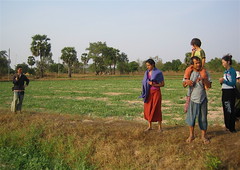

Watermelons were a secondary crop sown after the rice crop was harvested. It was so simple to grow, a child could do it, said the teacher at the Santi Asoke training center. The problem was pests for which they recommended three strategies. 1) Avoid mono cropping and use small plots with a variety of crops. 2) Chase away the pests. 3) If pests still persist then let them eat because, after all, humans can grow food and pests cannot. This last recommendation undid any notion I might have had that fighting pests was a battle to be fought to the death and won. How enlightened. They also recommended picking the worm-infested fruit, to ferment in molasses, to make a fertilizer called EM—effective microorganisms—a method learned from the Japanese.


As we picked our way along the dikes of the rice paddies, the watermelon farmer followed our progress with a digital movie camera to show his organic farmer's co-op. Thai organic farmers were not getting a lot of attention from anyone and the gaze of Westerners would elevate their cause. There were no ripe watermelons; he had just sent a truckload to market. Finally at the third field, he found some that would do and cut two open for us on the spot.

We happily ate this clean fruit without fearing for our stomachs. It was sweet and refreshing. In fact all the food we would eat on this trip felt pure and fresh. That it was grown on the spot gave me a deep sense of connection to the land. We were traveling locavores eating within a few yards of where our food was grown. There was no need to think beyond this tidy closed loop; I felt complete and secure. I ate more fruit than I did at home—oranges, papaya, bananas and star fruit, all with no ill effects.
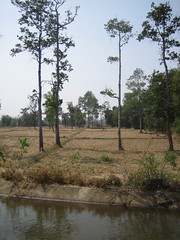

Walking from farm to farm in Jo's village, I gazed at the strange dry land with its grey white soil and tried to decide if it could be described as beautiful. Not at first, because I didn't know what I was looking at. Unlike an Italian countryside with its vineyards or an English one with its rolling green hills, both instantly recognizable as the stuff of travel brochures, this surreal flat, brownness had to grow on me. Height helped. There. In the next paddy. Very tall thin trees in a grid pattern with topknots of foliage like a Dr. Seuss illustration. That pleased my eye.


Back on the road our daily expeditions were punctuated by pit stops at roadside 7 Elevens, along the highway. All 16 of us would peruse the shelves of the multinational franchise and come out loaded with packaged snacks, buying enough to share with each other, the exotic tastes of peppered beef flavored potato chips made by Lay's, sweet sesame cookies made locally or the horrible fish flavored cracker that tasted like, well, fish food. I satisfied my craving for processed sugar with chocolate covered Japanese Poco sticks.

Healing The Farmer

For most of the farmers we met, it was their health that had turned them towards organic farming. At first they didn't know why they had the symptoms they did. Then it was discovered that the rat pee was toxic; rats living in the field were expelling concentrated chemicals into the waters of the field, which in turn gave the farmers intense rashes on their legs. They were also plagued by headaches and fatigue. Those who had ditched chemicals were convinced that soon every farmer would realize the connection and return to organic farming methods.

"People cannot learn without suffering," Jo said. The economic collapse had helped to create more such suffering, increasing the number of people deciding to take the healing path of self-sufficiency and organic farming.
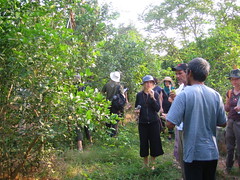

Standing in a lush plot of edible forest, we heard the story of one such man who had owned a successful trucking company. As the economy collapsed, he found himself in extreme debt, with the bank repossessing all but one of his trucks. He came back to the country and with his remaining cash bought a two-acre piece of barren land that nobody wanted. He too had taken the training with the Santi Asoke Buddhist sect, reduced his expenses to almost nothing, and in three months was able to produce enough food on his plot to feed his family.

We ate tart fruit from his trees and listened to how he had started his garden by covering the plot with straw waist high. He then dug a hole in the straw and made compost. Into this hole he planted a banana tree surrounded by vegetables. What they didn't eat, he sold at the market. He began to grow wild vegetables that nobody had bothered to cultivate before because they had been so easy to find in the forest. Soon he was making 100 baht a week.

"But that's only about three dollars," I commented. Yes, but it was enough to pay off his debts, Jo emphasized, because he had no expenses. I was beginning to feel as though I was in an alternative universe of tiny efforts that magically managed to turn people's lives around. Now he and his tiny wife were digging wells on the plot by hand. We looked down the fifteen feet or so and marveled. The water from the well would be used to produce limes in the dry season when the price was higher. Later we met the couple helping out at another site.

As we sat before them in a covered meeting space, the two beamed at us and the farmer told us about his current project digging a rice paddy there at the demonstration plot we were visiting, also created by the Santi Asoke group. Within view was the nearby University where ag students were being taught that chemical farming was the only way to grow anything in this arid land. The ag department was, incidentally, funded by chemical companies. At the Santi Asoke plot students learned first hand what organic farming could do. Some were even living in the earthen houses they had helped to build. They were beginning to ask questions.

It was not so long ago that chemical agriculture had been introduced to Thailand. Because of the government-induced deforestation during the '70s, farmers who had previously grown their vegetables in the forest had little idea of how to feed the barren soil once the trees were cleared. Enter the chemical company reps who dazzled farmers with the benefits of manmade fertilizers. The farmer's ego swelled with pride at the greenness of his rice crop. No one informed him of the downside. Nor did the farmers calculate their costs versus profit. They simply looked at the extra cash they were making with each harvest, not realizing that every year they had to buy and apply more chemicals than they had used the year before. By the time of the economic collapse they were 95% in debt. (Insert sex trade story here for this is the region where most of the women in the Bangkok sex trade come from.) Now with the cost of fertilizer following the price of oil, more were considering going organic.

Concern for the farmer's health had also opened the door to a revival of herbal medicines and the use of antioxidants to clean the blood of pesticide residue. Off we went to visit the herbal medicine co-op. Located within the grounds of a temple, the founders had persuaded local medicine men to reveal the ingredients of their secret remedies for the common cold, ulcers, hemorrhoids, back pain, and diabetes.

Each May the network would go into the forest to collect the medicinal herbs. Realizing that the forests were fast disappearing, the temple asked their worshippers to bring tree saplings instead of the usual cellophane wrapped offering plates (full of canned foods and hand towels folded into animal shapes). They also had help from non-government organizations and were able to open a health center. Now, they had a seed saving operation. 80% of their ingredients were grown locally.
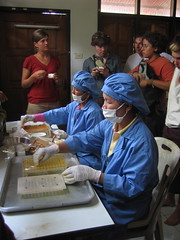

We were shown the hand press used to harvest various oils and watched as two women wearing hair coverings and latex gloves, filled capsules with turmeric powder. Medicines used to be made by rolling the ingredients into a honey ball, but because the network was working with Western trained doctors at the local hospitals, they had complied to Western standards.

This impressive whole systems approach led the network to take on the source of all the trouble and set up a fair trade rice co-op with its own mill to provide support for farmers to grow and sell organic rice as well as those transitioning to organic.

Fair Trade Closes The Loop

It was a Sunday when we visited the mill and sat under the blazing sun in plastic chairs while we awaited the arrival of the leader of the cooperative.
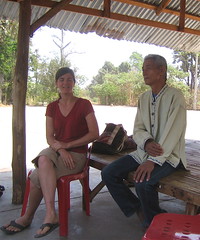

"Why have you come?" asked the silver haired farmer once settled on the shaded bench. "Are you farmers?" Peggy, sitting next to him, translated his challenging tone.

Having been so eagerly welcomed, elsewhere, as the auspicious farangs come to witness their humble farms, our group did not have a ready answer. We had only one farmer among us. Yes, who indeed were we, this oddly clothed, band of Westerners, traveling in the back of a truck. What impact did we hope to have on our lives by coming here? No one was going to hazard an answer. We must answer I felt. It would be impolite not to answer this village elder.

"We are eaters," I offered, taking the perspective of the book "The Omnivore's Dilemma". Peggy translated my answer and the farmer chuckled. He told us, then, how it all worked. That there were 1,000 family farms in the 17 year-old network. They sold overseas through GreenNet, a Thai organic wholesaler. After costs of running the mill, the profit was redistributed to the farmers.

"We got back what we invested, plus we made friends", the farmer told us. Now they concentrated on getting the word out through seminars at monthly meetings. The farmers in the network were also required to grow back the forest on some part of their land. With the price for organic rice rising by 5% a year, overall chemical use was decreasing in Thailand. Yay!

"Westerners brought chemicals to Thailand," he commented watching for our reaction. "Not that I'm blaming you," he added, smiling. Did we have any questions?

"Was he paid a salary to run the coop?" "Yes, but really only enough to buy laundry detergent," he replied.

"In all of his years of farming had he noticed change in the climate?" Oh, yes, yes what about that? I silently thanked Alicia for asking the question. Our nights had been cold, way too cold for Thailand. I had only packed lightweight clothes. Even wearing three shirts, two pairs of pants and a blanket wrapped around my head, that second night, sitting in the open dining area, I had not been able to feel warm. I had felt angry and betrayed by my own country. Peggy and Jo sent out for more blankets. Luckily, I had a nylon sleeping sack with me that kept me warm through the night.

"Yes," said the farmer, "sometimes we have three seasons in one day. The hot season is hotter with less rain and when the rain does come, it comes all at once. There was lightning where there hadn't been before; trees had fallen and people had been killed by lightning because they didn't expect it." We were subdued by this report of such radical change. Nobody asked about the future prospects given this report. What could anyone do about that which was unexpected? I hadn't anymore thought for the future than what was for lunch.

We were soon invited to proceed to the lunch pavilion where we were served more variations of vegetarian fare and were delighted to see omelet's. I had two helpings, not knowing that we would be offered another lunch of noodles in the village. I could hardly walk after that. My status as an "eater" had been stretched to the limit.

Also posted at energy bulletin

Labels: , , , , , , ,

Monday, November 19, 2007

Are We Green Yet?


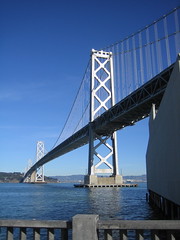
In reference to the oil spill in the San Francisco bay, two days after the collision of a freight tanker with a pier of the Bay Bridge, the Chronicle offered a one word headline: "Heartbreaking". How odd, I thought. I'd never seen a newspaper get so emotional. The picture that went with the headline showed a six column wide close-up of an oil-covered bird. The week before, the Chronicle had done a front-page article on the plastic garbage patch in the Pacific. Yay, I had shouted to Catherine. Never before had bad news looked so good to me.

It was only a little over a year ago that I had learned about the garbage patch and created my "Why Bottled Water Makes Amanda Cranky" display. In 2004, when I first wrote about global warming as a concern, it took three years for the Chronicle to take the subject seriously. Now, the knowledge gap was closing and suddenly Green was in. The CNN series, Planet in Peril, impressed us with its depth. MSNBC declared that it was now a Green station. This did evoke some skepticism. Had they just now figured out how to recycle?

Meanwhile the atmosphere at the Bioneers conference in October had been decidedly grim. Evidence of planetary woes was compounded by corporate mayhem in Burma to put in an oil pipeline, the never-ending war in the Middle East and the ever more obviously egregious conduct of the Bush administration. This should have been a time of large-scale action to reduce our carbon footprint, but instead we were in the midst of a resource war for oil, the very substance that was causing so much devastation.

The tanker that had caused the oil spill was piled high with containers thus serving as a vivid reminder of world consumption and the dramatic increase in shipping in the last few decades, inviting the inevitability of accidents along with the usual cost to the planet in pollution and fuel extraction. As this was an outgoing tanker, the containers were probably filled with bails of crushed plastic bottles and e-waste going overseas for recycling as opposed to new plastic crap, cheaply made clothing and next year's e-waste. One TV newscaster did mention that some of the containers were filled with perishable food and would need to be unloaded quickly. A fitting example of why it would be a good idea for communities to localize food sources.

It was a good week to return to the Green Festival. There, at least, we could buy something free of guilt (we hoped). Created after the pivotal protest against the World Trade Organization in Seattle, the point of the Green Festival was to show the world what fair trade, sustainably produced goods looked like. With the Gap having recently been busted for using child labor (followed by earnest statements from the CEO that this was not okay), it was a good reminder that fair trade still had far to go.


I happened to be reading Naomi Klein's first book, No Logo.

Sweatshops, I learned, were systemic and not an aberration that cropped up now and then to mar a company's image. Corporations had distanced themselves as much as possible from actually making things. They were now all about branding and slapping their label on goods made for them as cheaply as possible. Contractors competed with each other to get those everyday low prices for them. This had created what were basically indoor work camps all over Asia, enclosed in walled compounds that were protected from local taxes in an effort to lure the big name "investors". These "export processing zones" or "free trade zones" were impenetrable to outsiders and short on inspectors. The labor, usually teenage girls and young women, were kept intimidated to discourage labor unions from forming. And it wasn't' just clothes, it was everything consumers might buy.

Catherine wanted her own Kleen Kanteen, the stainless steel water bottle that had become the hallmark of environmentalists. It was made in China. I asked the sales rep about the factory that made these bottles. Were they sweatshop free? She did not have a definitive answer. They had given their contractor the sweatshop free guidelines they wanted in a factory, but they could not report having inspected the factory themselves and were continuing to seek transparency. Well, at least they had guidelines. The clothing companies I talked to were better. Their factories were registered fair trade operations. Other vendors like To Go Ware had sought out Burmese refugees on the Thai border to make their portable bamboo flatware and lunch containers and had a personal relationship with them.

At the add-on bidet booth, I wanted to tell them that all that hardware needing to be plumbed into an existing toilet was way too complex a solution just to save toilet paper (and the Boreal forest) when we could use one of our old plastic sports bottles that we now had no use for, having replaced them with the Kleen Kanteen. I had been inspired by the bidet idea last year and had come up with the sports bottle alternative, but there were too many people hovering around their hardware-bedecked toilet for me to attempt to derail them.

"I'm worried about the plastic bottle," I told the young woman at the Dr. Bronner's soap booth. The characteristic bottle, with its famous label covered with health tips and Bronnerisms, was 100% post-consumer PET, she told me, a technology the company had been a pioneer in getting started. I hadn't believed it was possible to make bottles with 100% recycled plastic; I had read that the polymers break down when reused. Good for them if they have figured that one out. They were local too, being in California. The Green Festival wasn't doing a whole lot about curtailing overseas shipping, but it was improving working conditions of workers and the environmental impact of consumers. Thus it was our annual shopping go-to event for socks, underwear, soap and hats. And food for thought.

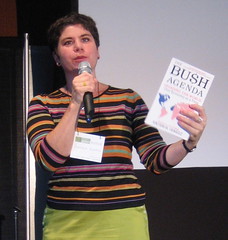
This year I was eager to hear Antonia Juhasz. Before reading her book The Bush Agenda: Invading The World One Economy At A Time, I thought of the Iraq war as a mega distraction on the part of the Bush administration, but her description of the companies profiting from the war made it clear that corporations, mainly Chevron, Bechtel, Lockheed and Halliburton, had been controlling our government long before Bush, pushing the country into policies that had made the world a more dangerous place. But how did the war connect with the green movement?


The Bush administration is not leaving Iraq until it has the oil contract it wants, Ms. Juhasz told us. Oil companies used to have control of 80% of the world's oil reserves in the past, but oil producing countries, like Iraq and Iran, had nationalized their oil, leaving oil companies with limited contracts involving production, so of course they want back in. And they want a 25-30 yr. contract that not only gives them the right to control exploration and production of the oil in Iraq, but also gives them the lion's share of the revenues, which would seriously undermine the Iraqi economy. And, what's more, this contract must be underwritten by the US government, which means that our military must remain there to make sure it is carried out. This would amount to an endless war for oil.

And, she added, the reason the administration wants to invade Iran is because the current Iranian government has been partnering with China regarding oil contracts and the only way to break up that partnership was to get rid of the government that made that contract. And I thought it was because they, like Saddam, had threatened to sell oil for Euros, which would cause the dollar to collapse. I got my chance to ask her about that during the Q and A.

She agreed that this selling of oil for Euros would indeed be disastrous for the dollar, but that it was very unlikely because the oil companies would have to agree to it and so would the Europeans (who presumably don't want to piss off the Americans). I was relieved as I have been spooked about currency collapses since the Asian Tigers went down.

It was left to someone else to ask about the green alternative. If this war was about oil, couldn't we simply transform the economy to one that used alternative energy? Her answer was that we cannot create a big enough market as long as we have an oil-dominated system and we cannot legislate alternative energy because the oil companies will outspend our best efforts to put legislation before the public. For instance Proposition 87 which would have funded research for alternative energy with a tax on oil companies as well as reduce oil consumption by 25%, lost last year because of the counter propaganda of the oil companies. They spent more on that California campaign than Kerry did for his entire campaign for president, she told us. So there it was. The oil companies were blocking the green movement altogether.

Someone else asked about boycotting oil companies. She said that such boycotts tended to drain activists and are largely ineffective because oil companies have such deep pockets they can wait us out and once you boycott one company what company are you going to buy gasoline from that isn't also involved? You can buy it from Citgo which is Venezuela owned, but they haven't got nearly enough to supply all of us. You could buy it from Valero because they are not involved with production, but then they have to buy it from someone who is.

Her proposal was that we must insist that the oil companies be broken up into smaller companies in order to break up their stranglehold on the government. And how are we little people going to do that, another person asked. She assured us that it had been done before by concerned citizens.

Yes, we are asking a lot of our citizens in these extreme times. Not only am I compelled to do an environmental impact report on the lifecycle of every item I consider buying, as well as ensure that the lives of those who make it are just, now I must call up my representatives every week and urge them to break up oil monopolies (and stop giving away our civil rights). Couldn't we just undergo a cultural shift?

Couldn't this Green culture that we are nurturing here in the Bay Area become part of our cultural pride and identity, that we then spread to the entire state of California? Take the Italians and their love of coffee. So innately informed are they about what coffee should taste like and how it should be sold, enjoyed and drunk, that Starbucks has not dared to open one store in all of Italy for fear of being immediately unmasked. Their faux old-world coffee experience exposed for the dishwater serving, fast food, buzz shops that they are. Starbucks has managed to fool the world, but they know it would only take a few Italians to call their bluff. Oil companies should't be able to outspend us into voting against a tax on them that would fund alternative energy. Their efforts should be immediately apparent for the self-serving manipulation that it is.

After my last Green presentation (during which I showed off my new Renaissance vest made from a discarded Chinese dress and invited people to check-out my hair because I was now washing it with baking soda) one of my colleagues told me I was his Green conscience. Another agreed and showed me her refillable water bottle which she had gotten after seeing my anti-bottled water presentation. "You wouldn't be telling us this stuff if you didn't really feel passionate about it," she pointed out. No, indeed, the only way I could live with myself, and continue to face the bad news, was to change the way I lived and share that journey with others.

I try to keep it light, but perhaps the Chronicle was not far off in using the headline "heartbreaking". As one activist, teaching about sacred activism, pointed out, "It is in the breaking of the heart that we truly discover what it is we feel compelled to do". There is plenty now to break our hearts, from oil sodden birds nearby to polar bears starving afar. We just have to have the courage to feel it long enough to take action, he counseled.

Also posted at energy bulletin

Labels: , ,

Earthworm. Get yours at bighugelabs.com