Amanda Kovattana

Middle-aged musings in interesting times

Tuesday, July 02, 2013

Occupy Marriage


My partner Catherine asked me to marry her the day of gay pride, three days after the ruling came down allowing the quest for marriage equality to proceed. I said yes, but after so many years of being against marriage as an institution I have to write myself a 3,000 word attitude adjustment.


What Cost Marriage Equality?

The gay and lesbian community won a huge victory this week. With no help from me. (Unless you count being publicly open about being in a long term relationship with the woman I love.) When it became clear a decade or more ago that the gay community was going to run with the marriage equality issue I looked upon it much as I did the issue of gays in the military. That this was a niche issue relevant to the few rather than the many and I decamped. I no longer called myself a gay activist. (I became a climate change activist.)

In the late '80s I chose the political identity of lesbian over bisexual because I realized that the straight people I worked with and came out to needed an unambiguous identity in order to address their questions to me about being gay. (The idea that everyone had a fluid sexuality, I quickly realized was too difficult to explain.) As a gay activist I lived the phrase made popular by the feminists of the '70s that the personal was political. And  in the '90s I wrote about my lesbian household as a columnist in the relatively conservative arena of a weekly newspaper in Palo Alto. 

My last point of contact as an activist for the gay community was as a panelist going into high schools (including my own) to talk about the trials of being a lonely, frightened gay kid whose future seemed severely curtailed. The reactions of parents to my appearance began with "I get it about the gay kids, but why does my kid have to be exposed to that lifestyle". Umm, no not getting it at all. Who, after all, was likely to do the bullying?

I often spoke alongside speakers from PFLAG (Parents and Friends of Lesbian and Gays). This group was of immense emotional support to the gay community in the days when parents were just as likely to disown their gay children. The emotional outpouring as PFLAG marched in the Gay Liberation parades of the '70s onward did much to heal this wound. The support offered to parents was equally important. When kids came out to parents, parents typically went into the closet tearfully grieving what was essentially the death of a heterosexual child.

With the fight for gay marriage, the issue polarized the nation much like the abortion issue continues to do so. We made the Christian Right stronger by giving them a unifying enemy. Christian leaders admitted that homophobia and the fear of homosexuals brought more money into their fundraising campaigns than any other issue and they continued to write those letters perpetuating the hatred. And the hate trickled down and was made personal in the dialogues of families of the Christian right and into the schools where they already had a foothold on school boards. The fear of gay marriage was translated directly into the fear that children as young as six would be forced to learn about homosexuality in school. (This was a gross misinterpretation. In actuality it would only be in the sex ed classes that homosexuality would be mentioned at all and only in passing as an acceptable condition.)

At the height of this power of the Christian Right it became popular among the teens of those families to be a "hater". It was something to be proud of. I saw in their ranks, t-shirts that said "I (heart) haters". And because of this turf war being waged in our schools I believe that the fight for gay marriage had a direct correlation with the increase in bullying and the rise in numbers of suicides among our most vulnerable population. A population very hard to help because they were under the age of consent and the fear of being labeled a child molester kept the gay community from reaching out to these teens.

When I came out in high school it was difficult to consider a gay identity when it was an emerging movement in the public eye, but it did not feel nearly as dire as what gay and questioning kids were reporting from their lives in the '90s going forward. I make this conclusion because the generation before me had a different experience than I did. The idea of a gay identity was so exotic in the '50s that there was no need to consider it at such a young age. The '50s being a time of chivalry and protection of those smaller and weaker than ourselves, those who were stronger protected the weaker as a point of honor. The bigger boys took under their wing their weaker (more effeminate) counterparts. And the message to the bullies was that bullying was for the weak of heart and the insecure. 

Once out of high school, of course, it was a different thing altogether and those who found themselves in the gay lifestyle would have to fight the good fight that we came to know as the gay liberation movement. Meanwhile for those under the age of consent, the more homosexuality became visible as an identity the harder it was for kids to ignore this possible option and as their parents expressed their homophobia to the TV as mine did, so did homophobia grow in schools.


One Nuclear Family Can Ruin Your Whole Day

Since gays were largely unwelcome in their families of origin, the lesbians and gay men of the early gay community created their own version of family that was inclusive of their entire community. Marriage was considered an archaic institution in the Marxist days of lesbian feminism. And there was much experimentation as to what a family might be. It included polyamory, extended families and the raising of children within these extended families. Meanwhile the feminist movement fought to redefine marriage and raise women up from the status of property owned by men to having their own identity and equal economic rights within a marriage. 

With the devastating years of the AIDS epidemic, the party gave way to a funeral and issues of inheritance of a dead partner's things came into play. The very real threat of a partner's family coming to claim all his/her belongings and the home you had built together was foremost in our minds and driven home by countless maudlin movies. 

A woman who owns her own house is a dangerous proposition I concluded when my ex lover asked me to leave her house, my home of five years, in favor of the new lover who had moved in. Once I made my home in Catherine's house it did make a difference to me, when after many years of cohabitation, Catherine offered to set up a living trust guaranteeing my ownership of the house should she meet an untimely demise. It made a difference to have that piece of paper because, rather than being prepared to leave at any given time, I was more inclined to put my effort and money into our home.

Marriage from a legal standpoint, without all the sentimental and religious overlay is essentially a matter of property. It is no accident that the woman who sued DOMA (the Defense of Marriage Act) was a wealthy woman protecting her financial interests after her female companion died leaving her a sizable estate on which taxes were due to the tune of some $363,053 because her Canadian marriage to her spouse was not recognized on a federal level. With that amount at stake I would sue too.


The Taste of Victory

When the victories of DOMA and Prop 8 were announced there was an immense outpouring from my straight contacts on Facebook. It felt as if everyone had suddenly become PFLAG. Love was love, welcome to the American family. All this support and love moved me to reconsider my stance on gay marriage not just as a gay victory, but as a heterosexual victory. Marriage had been redefined by the presence of gay people into something cool and desirable. The struggle for gender equality within marriage would get a boost from those who have no gender inequality to consider. (There would still be inequalities related to education, money, class and possibly race, but at least these were gender neutral.)

This long fight for marriage equality (which is not over until every state has joined in) feels very much about privilege for some and not a lot about improving things for everyone. My health care has for many years hinged on Catherine's job and my status as her domestic partner. One of the insights of activists during the time of AIDS was that the gay community would see fit to use their alliance with other social justice movements and their growing political clout to mobilize for national health care. This was so threatening to the powers that be that during the Clinton era a bone was thrown to the LGBT community regarding gays in the military. In practical terms the "Don't Ask, Don't Tell" policy enforced a closeted existence. In the run up to discussing gays in the military it created a diversion that divided the queer community against itself and installed a false gay agenda. LGBT activists were forced to accept the DADT policy as a win for all. Not.

The marriage equality campaign has trained a generation of lesbian and gay activists to work hard to write themselves into what is basically a non-inclusive institution based on the property rights of white men. As mainstream a convention as you can get — one that does not include any benefits for those not married. 

Speaking of a privilege every American should enjoy with few exceptions, the pinnacle accomplishment of the Civil Rights Movement, the Voting Rights Act was gutted the day before marriage equality peeled across the land. By the same Supreme Court. I did not see any sentiments expressed in the ranks of the privileged that we were all less American because of this. But the Voter ID laws that states are now allowed means that getting the required ID stipulated by these new laws costs money and time which translates to more poor people of color prevented from voting. (And trans people who may be accused of voter fraud because their ID does not match the gender they are presenting.)

No longer does the LGBT community identify with its most vulnerable, most disenfranchised members, but with its most privileged in what basically amounts to a trickle down promise. Now that we have our right to marry, goes the promise, we can get back to the rest of the gay agenda. Which was what exactly?

During the film festival my friend Dave and I watched as a representative of a short film about the age of consent attempted to remind the largely gay male audience of the vulnerability of not only gay youth, but all youth. 

"As you celebrate this marriage equality win", he said, "please consider that in order to support our youth we need to lower the age of consent." 

Yes that would certainly help. If young people had the right to make their own decisions about their sexual activity at least by the age of 15 as it is in Denmark, then they would have social services to turn to. The response of the audience was to literally shut him down. "Show the film," someone shouted. Followed by applause and then clapping in unison to drown him out. 

"Don't you see?" their arrogance seemed to say, "we are mainstream now. We will never again be mistaken for child molesters. We will show by our fine status as married couples that it will get better for gay kids. But we will in no way help until they have made the harrowing passage to the legal age of consent." Meanwhile there were weddings to plan.  

If anything had helped ease the passage of gay youth it was the entertainment industry which put more gay and lesbian teens in TV shows over the past few years than adult characters. There was also Brittany McMillan, a Canadian teen and self identified Christian straight girl who launched Spirit Day from her tiny tumbler blog in October of 2010. On that day we were to wear purple to show our support for LGBT teens who were victims of bullying. Over 1.6 million Facebook users signed up for the event which became highly visible as celebrities and TV anchors were seen wearing purple. I bought myself a purple ribbon that day and tied a bow around my pony tail to wear to my karate class. It was duly noted by my teen classmates and the head instructor gave quite a long talk after class about sticking up for your friends.


Occupy Marriage

Catherine had long ago become a proponent of marriage equality and felt it entirely unfair that there were some 1,049 benefits to marriage that were denied to us as domestic partners much of them with a financial impact. I had to agree with her that the benefits were substantial. I stopped arguing against the marriage equality campaign, but neither did I speak in support of it.

And now that  marriage had been made available to us, the political was suddenly made personal. I knew it was only a matter of time before she was going to pop the question. The differences in our incomes made our tax returns substantial as a married entity and that compensated for the time I put into our household chores. I had also proven my worth as a partner in the year that I accompanied her all those many hours during her cancer treatment.

I began to view marriage much like I had viewed becoming a citizen of the United States. As a legal platform from which to both protect myself and occupy a nation whose policies and treatment of others I did not entirely agree with. We were already living in the state of marriage, we had our green card—we were registered domestic partners, but to really occupy this construct we would need a passport, a marriage license.

On the day of Pride, while all those celebrants of marriage marched in record breaking heat downtown we sat in the cool of the Castro Theater for our final four hours of queer films as is our custom. It was there that Catherine asked me to marry her. And I said yes. She was very happy and so excited about this news that over dinner she wanted to know how I would announce it. It hadn't occurred to me to go that far, but she was eager to make it public as soon as possible. It made her happy to celebrate our commitment to each other and have it acknowledged in the eyes of the world. It was an expression of her love for me.

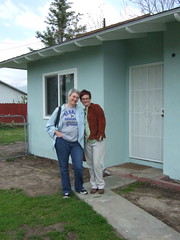
Forced to consider how we would play out this new status I knew it wouldn't be right to keep it secret after all I had said against marriage. This was too big an about face. And so I allowed that she could announce it in the most public way possible—on Facebook. She had taken a picture of me with her iPhone from across the table and when we got home posted it with her announcement. It was actually a nice picture (though we were not talking about the prospect of getting married at the time). Perhaps we could also do our wedding on Facebook. Okay maybe not.

I did attend a wedding once that informed me on the topic. It was a marriage of a middle aged straight couple, the bride a prominent environmental activists in our community. The wedding was held with a wildly dressed congregation of Faithful Fools. And a woman in a clown's nose got up to protest the union on the grounds that love was dangerous because if people committed to taking care of each other it would lead to political unrest and possible attempts to stop global warming. And if marriage was performed as an act of community activism who could stop the power of love? 

Okay, put that way I'm almost convinced. A relationship made stronger was a good base from which to love the world more. And the planet and all those we worked with and collaborated with for the good of all. It was also my hope that now that the queer community had attained this level of respectability that we would remember ourselves and become more wildly queer as an occupying force rather than behave as though we had succumbed to the sedate values of our captors. Yes this was a model I could expand upon to occupy marriage. Champagne anyone?

Labels: , ,

Thursday, May 30, 2013

Enter Dreaming

The mystery of my missing memory on the eve of the 2012 Solstice clung to me for months as I searched for words and some sort of framework to hang it on. While working on the play at the gallery in Oakland, I met Lisa, a friend of Lenore's, who had also been at the Solstice ceremony. I pressed her for details when we went to fetch dinner. She found my story to be rather incredulous for she was not there after the ceremony to hear me ask the same question over and over—"Did I come with someone?" She was, however, able to tell me how many people had been there (a whole roomful backed up to the walls) and that the lighting had indeed been low at floor level.

"You must have been so scared," said my mother when I related the story to her.

"I wasn't actually there to be scared", I reminded her. I more felt like I had been through the looking glass like Alice. The experience was so dreamlike. 

Catherine was also worried when I told her that I had no memory of where I had gone the night before (by myself with complete strangers except for Lenore and two others I only met once). But when I told her that every time I tried to grip my mind around the experience, I felt a reassuring sense that everything had been alright, she was willing to trust that nothing serious had happened.

I did ask myself, as soon as I could hold a coherent thought in my head the next day, if I should abandon all things shamanic. My answer was immediate. No, I was not going to let this incidence take that away from me. That much I was certain of. Besides if a shamanic ceremony had been powerful enough to dislodge my mind, then it was worth further investigation. Our science minded culture wanted to put it in a medical context, a malfunction described as a black out, but I was looking for something else, a metaphorical meaning, a narrative explanation. 

"It could be viewed as an initiation," Dave agreed when we discussed it weeks later after he had taken me for my soul retrieval ceremony. "Especially for someone who put such significance on the date," he added.

Ah yes, I had forgotten about the significance of the 2012 Solstice date. Once it had passed and all the hullabaloo about the end of the world being for naught, only the seriously out-there New Agers wanted to mention it again. But I had indeed spent over a year focused on the Mayan prediction, not as an end date, but a gateway to a shift. I just hadn't thought of it as my own personal shift. 

I decided to ask my Grandmother spirit about it. On a journey to the upper world, I sat at her kitchen table and asked why the Solstice ceremony had unfolded as it did.

"Well it got your attention didn't it?" she asked. "The ceremony connected you with Lenore who could help you. And the soul retrieval was necessary to help you move along on your spiritual journey," she explained. It sounded quite logical and efficient especially given my disinclination to ask for help of any sort. And it was a soul retrieval I had asked for though I knew nothing about it and I don't know how I knew to ask for such a thing. My spirit Grandmother's answer still didn't explain the incredible feeling of lightness that it left me with.

At the close of 2012 Catherine was nearing the end of her cancer treatment. When I asked how she was doing her most frequent answer was that she was anxious about "impermanence" the Buddhist term for the temporal nature of the universe. 

At which point I would say "Oh, is that all?", extend my condolences and go back to my room for we had made an agreement that, in my caretaker role I would not attempt to offer much help in these existential matters. I would be allowed to save myself and not inhabit with her the state of anxiety. She had our dharma teacher and her therapist to help her cope with impermanence. But once I had lost my mind to the universe I was giddy with it, with the cosmic joke of it all. The next time Catherine complained of impermanence I could hardly stop myself from snorting with suppressed mirth. 

"Can't you see it from my point of view?" she asked as she faced yet another test that might reveal a recurrence of cancer.

"I just drove home from Berkeley with no memory at all and noting bad happened. Why should I worry again?" I said and giggled at myself.

I continued to think of life as a cosmic joke. After my soul retrieval with Lenore people treated me differently as if they could now speak to me where before I was a bit too enigmatic no matter how transparent I had tried to make myself through my writing. These essays had certainly helped by allowing me to be seen like a creature in an aquarium, but the formality of the essay form was as thick as aquarium glass separating me from my reader—keeping us both safe. Now the glass was disappearing in places, as I began to be able to talk to people in a more heartfelt way. It was liberating, like breathing fresh air. This part Catherine greatly appreciated; it allowed her to know what I was feeling in real time.

My thoughts now turned to the metaphysical. My mother, who was also interested in metaphysics, was holding out for a scientific explanation for things; she wanted me to read a book someone had given to her called "Proof of Heaven", wanted to know what I would think of it.

"It's about a surgeon who had a near death experience and he talks about how he found heaven," she said. I sighed inwardly. Yes for phenomena to be accepted as proof it had to come from the mouth of a man at the top of the medical pecking order and be a majorly dramatic event.

"I don't need a near death experience to know", I said, "I just had a near lost-my-mind experience and now I know I'm in the lap of the gods. I will never worry about anything again; everything was just fine without me even being there." My mother looked worried as though I might now throw caution to the wind. Hearing myself talk like this; my words sounded grandiose, but glorious at the same time. Sitting in the lap of the gods sounded like a box seat for an Egyptian prince.


The Collective Unconscious

It was not until my birthday, five months later, that I would find a satisfactory explanation from my friend Martine. Martine was our resident expert on multiple personality disorder (now called dissociative identity disorder) having shepherded an ex-lover through years of ineffective medical care for a lifetime of blacking out episodes when other personalities took over. I cornered her at my birthday party and asked her what she could tell me about this event of my having disappeared from myself only to have my ten year old personality take over.

"The first thing I can tell you is that everyone has alters." she explained. (Alters were personalities that were fragmented from the core personality and those personalities can come into play at any time to do different things.) "The only difference for people with dissociative identity disorder is that their alters have become separated from their personality and they have lost contact with them. Just be glad this happened to you now and not when you were a teenager," she added. Yes having to explain where you were when you were supposed to be in school and having no idea where exactly you were, would certainly make adolescence a harrowing experience. You'd have to make stuff up.

"Do you think soul retrieval would work for this disorder?" I asked her.

"Sure," she said, "but it's never going to happen with our medical system. All they're interested in is drugs." Yes we all knew that. It was hardly worth discussing. I gave her more details of my experience. She had not read my essay on account of Microsoft piling more work on her programming desk after the year of firings.

"How did you feel after you came back?" She asked. I described how euphoric I had felt for three days after. How every time I thought about the event I knew that nothing bad at all had happened. She nodded as though this was an expected part of such an experience. Then she told me that Jung had said that those who can slip from one personality to another are much more able to join the collective unconscious in that space between personalities. Which would explain the heightened sense of well being I had experienced. I knew it. I had touched the Universe. I had experienced the universal oneness of all beings. 

"And it was the solstice of 2012," I emphasized. "I was out there with the collective unconscious helping with the transformation." This was the story I most favored because if I was missing from myself why not? I could have been anywhere and no one could prove otherwise even myself. "And it was your birthday too," I added. Martine was indeed born on the winter solstice which just made her role in explaining all this to me even more significant. 

She was perfectly happy to accept that I had assisted in the 2012 shift. Then Dave who had been listening in chimed in about how recent research on alternative perceptions of reality had been censored from the prestigious TED talk series. Stacy joined in as the conversation drifted to how science, with its dogmatic worldview being the undeclared religion of our time, was completely threatened by these alternative views of reality. The conversation carried on while I poured oil in a pan to fry the chicken we would have for dinner. 


Initiation

As initiations go, a near death experience is standard for shamans while other equally dramatic paranormal events had brought many to the practice. Okay so maybe contemporary people, need to be hit on the head with a 2" x 4", but some of us may just need to be woken up from a culturally induced numbness and welcomed back with a big cosmic hug. 

Now that I was back in the lap of the gods, I could remember incidents of my childhood when I felt this connection. Of being alone, once, after school, outside drawing on a chalk board which was resting on the ground against the school house wall. I paused and sat back on my heels, drawn to look across the yard at the quality of the afternoon light. Looking at that warm light, I was struck by a sense of a fully populated universe accompanying me and being a part of me. And I wondered then, at 8 years of age, why did adults worry so much when clearly just to be alive meant we were being buoyed up by spirits. I did not have all those words then, but this memory would stay with me asking me for a place to put it. I had written about it before 25 years ago, but my secular American writing teacher saw it as childhood naivete and I dropped it. Nor did it make it into my memoir of Thailand though I saw it as a encapsulating experience of my life there.

The rest of my childhood in Thailand was equally filled with spiritual conversations with myself prompted by the acknowledgement of the unseen world in the vividness of Thai culture. I was so adept at slipping from my mother's British culture to my family's Thai culture that it was not hard to think of the world of spirits as just another culture to enter. And when we came to California I picked up all the new thoughts of the human potential movement of the 60s and '70s just as readily. 

At a free lecture on self-hypnosis that my parents took me to when I was fifteen, I was one of two in the room to admit that I had indeed been floating along on a cloud with my name on it just as described in the guided meditation. My parents humored me, their dreamer child, but they themselves were self-consciously, poo pooing the whole thing especially my father (who suffered from nightmares and wasn't about to let anyone lead his mind anywhere).

"You're very suggestible," said Stacy when I told her that story. 

And having thus kissed the Universe on the 2012 Solstice—the birth of the age of transformation, I was now aware that I was in danger of becoming unbearable in that way that people are when they have found Jesus. I tried to keep a lid on it.

I still made all my walks with the dogs an opportunity to communicate with the universe and look for signs just as I had done the first dog walk following the solstice ceremony. And when I directly asked for things I found answers. Early on in my work with Lenore, I asked the Universe to show me the money to fund this spiritual work I was doing with her. When I got home there was a message from a client I had contacted a month before, but wasn't sure she would ever confirm. She would be a regular weekly gig. Coincidence? Perhaps, but I chose to see it as confirmation and gave thanks profusely.


The Cobra

The more convinced I was that the Universe was communicating with me, the more sensitive I became to the TV shows and movies we were ingesting. All of them were about desperate people, especially desperate white guys choosing a life of crime. These stories reflected Catherine's view that life was harsh and she appreciated the clever, well written scripts full of ethical dilemmas. While I had to fight to keep these stories from draining my energy and from eroding my own internal truths.

It was a bad week; an old friend of Catherine's had just been diagnosed with liver cancer and would likely die from it. I still refused to believe that life was set up to be harsh. People died. Whether they died well or not depended on their acceptance of it, but I had nothing to offer to prove otherwise. I feared being sucked into this vortex of despair, this dark night of Catherine's spiritual struggle.

At my next session with Lenore, I told her that I felt my relationship with Catherine was at a crossroads. I described how we were now living at opposite poles. At one end life was harsh and at the other life was a cosmic joke. I had not the strength to bridge this. Lenore asked how long it had been since Catherine's diagnosis. In April of last year I told her. "Not very long", she noted sympathetically. Then she told me that I could take a journey to find and talk to the spirit of my relationship with Catherine. And ask it what was the meaning of this "crossroads" as I had put it. 

Whoa, there was a spirit of our relationship? I was intrigued by the idea. Enough to make the journey right away with Lenore drumming for me. I lay down on the couch and put my cap over my face. With the drum beating, I ran down to the lower world calling for my power animals.

Mongoose and Bear and I set out to find this spirit. We rode Bear into the jungle rather tentatively, looking into the trees at all the ghosts. Along came a cobra crossing our path. "Don't make me talk to a cobra," I thought. And it disappeared. Well why not I wondered? It's true I was deathly afraid of snakes and maybe for good reason, but this was the dreamtime and I was with Mongoose (who was, of course, quite handy with cobras). The Cobra appeared again much larger, looming over us, facing us, ghostly like a phantom. I drew myself up to ask my question.

"What is the significance of this polarized crossroad in our relationship?" I said. Then I collected myself and waited for a response.

The Cobra's voice echoed in my head. "It is your task to learn compassion for Catherine's darkness. Your lightness will help her shift her view of things. It helps for her to know that you are okay so she doesn't have to take care of you as well. And it is fine for you to continue to nurture your lightness."

"That's powerful," said Lenore when I told her about the Cobra.

"Yes you have to be very careful how you step with a cobra," I said acknowledging the challenges of my relationship with Catherine. (But given the right tune cobras can also be charmed and domesticated.) 

When I told Catherine about this vision she was pleased that I had taken the trouble to inquire about our relationship and assured me that she was coming out of her darkness. A week later she went to help her friend Al get to his chemotherapy treatment. She had to drive to LA to do this, but the four days she spent with him filled her with the purpose and perspective of the caretaker. And Al, who was a Chinese medicine doctor had such an equanimous view of his death, that he was ready to go. He just wanted to get his affairs in order and Catherine and other friends helped begin this process. He died two weeks later and Catherine was sad, but not devastated. She had learned valuable lessons from him she told me and seemed to have a renewed strength.

While I had so much to read and investigate from a list of books and resources that Lenore had recommended that I would be busy for a while building context for the shamanic culture I would further immerse myself in.

Labels: , ,

Friday, March 26, 2010

A Renting We Go

In this saga and a half I conclude my venture into home renovation and landlording following the California real estate collapse.

While in Home Depot shopping for mini blinds and towel bars I get a call on my cell which was now dedicated to calls from potential renters. Our second house on our lot was nearly ready to go and I had timed the ads in the paper to coincide with my third solo trip to San Bernardino. There were three Home Depots near the property; I choose the one with the same layout as the one at home. It seemed to lessen the culture shock.

"Hi this is Joe," said the caller then paused as if he was beginning a long term relationship. He tells me his story. Most callers don't tell me a story; they just want to know how much and how big. The story is about how he had just moved back to California after a spell in Georgia where he was working on a job with his uncle and now he and his wife and three little kids were back living in his mother's house, but his mother wasn't going to be able to keep the house so they all had to move. The upshot of the story was that he was discovering that he was picky about the kind of house he was willing to live in and he was interested in my ad boasting that we had newly renovated. He promised to come by and see the place.


I wondered if my modest interior design choices for the little house would pass muster. The kitchen with its butter yellow cabinets, Formica counter top in caramel tones of faux stone and the floor tile of swirled mocha and pond scum green looked surprisingly okay. All the colors went together quite nicely against the bright white enamel walls; the floor tiles tying chromatically into the chocolate brown of the new carpets in the bedroom.

I had struggled to find window coverings that would span the over-wide ranch house windows of the living room and, after studying the Ikea catalog for two hours, had found the only ones that would do. Their top of the line Kvartal system was very modern looking and a marvel of Swedish engineering. The curtains I made by cutting in half pairs of Ikea drapes and piecing them together side by side. The kitchen windows sported a pair of Kvartal panels with a trendy curved design cut into the stiff white material.

They looked quite nice from the outside, matching the white trim on the newly painted exterior which was now a minty blue green. The choice of color for each house had been a subject of much discussion with Catherine and photographing of houses while dog walking. In the end, to fit into the San Bernardino vernacular of neon yellow and terra cotta orange, I migrated from the tasteful palette of Bay Area earth tones to the color chart from the paint department targeting the Spanish speaking population.

Thus the house, transformed from vintage bubble gum pink to Aqua Tequila, was almost breathtaking in its cheerfulness, evoking beach houses and holidays in the Caribbean.

For the front house I chose a more traditional white with a dark teal trim. In part to impress Mike with something a bit more masculine that would evoke a grander house. He was, after all, going to live in it and be master of the lot, as my manager as well as contractor. I was pleased when he noted that the teal trim would go well with the mint green of the back house.

There was very little left to do once the curtains were ironed and hung up. Without an actual client it was hard to know quite how the space would be used. There were clues. Everywhere that an angled nail had been pounded into the woodwork, by a previous tenant, I put a hook; likewise the backs of bedroom doors. In the one bathroom I replaced a single towel bar with two and a ring. And in lieu of a hall closet two sets of hooks on the back of the front door.

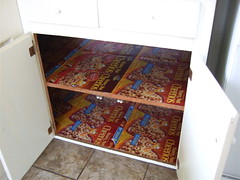
And since I had time, I lined the shelves. The old vinyl had left sticky residue on the wood. But here I parted from the norm and went in search of an eco alternative. I didn't like the off-gassed chemical smell of vinyl, plus it was made of PVC, which was now considered toxic.


I turned to my collection of cereal boxes, which I had been using to construct book mailers. I lined the drawers of our new bathroom at home with sections of Raisin Bran and Cheerio boxes. Pleased with their resilient surface and op art affect, I took the boxes to San Bernardino and with my corporate size paper cutter, spent a fun evening trimming boxes and thumb-tacking them to the shelves.

My "picky" client, arrived in a white t-shirt, with a tattoo on his upper arm, carrying what looked like a man purse, but turned out to be a camera case. So he could show his wife the place, he told me. When he described to me the squalor that he had seen in the local rental housing market, I realized that new investors, having snapped up all these foreclosed properties, had simply left them in the condition that they had found them, putting them up for rent right away. Yuck, I thought, remembering the condition that we had found our houses in. We couldn't have lived with ourselves.

Joe was eager to rent our house, but as a self-employed carpenter, he didn't have an employer and with no current landlord the only rental history I could check was from two years ago. Plus his credit wasn't too good and he was "between bank accounts" he told me. I already had a contractor and was nervous about having both tenants relying on the same collapsed housing industry. Now, it was my turn to be picky. Still he was my only contender. I gave him an application.

Old Time Values

I walked to the front house where Mike was working on prepping the stucco and woodwork for painting.

"You know," he said, "I could just slap on the paint like most people would, but I want to do it right and patch this woodwork." He pointed his putty knife at the sill, which had a corner that was broken off and painted over.

"And these window panes need to be re-puttied", he added as I took in the cracked dried, up bits. "But it's going to take me a while." He was asking us for more time, but not more money; he had already bid the paint job and was putting in his own time for his own satisfaction.

"I know," I said, "it's exactly what I would do only I knew I'd have to live here for about six months."

One of the first things I had asked Mike, when I met him, was if he thought the sash windows could be saved. I had spent many hours searching the "This Old House" website reading about how original windows were what gave the house historical interest; they could be rebuilt with a few hand tools, even made energy efficient with storm windows.

In high rent areas like Pasadena, where I had stopped to visit a colleague, such historical elements had been kept in good repair. Down here in rent-it-cheap-ville they were being held together with silicone caulking and you were lucky if they opened. If a house was being flipped, out would go the old windows to be replaced with cheap vinyl sliders. Traditionalists claimed that vinyl windows had too many plastic parts inside that would soon break, not to mention that they were a factory manufactured product of the petroleum industry.

I marveled that I'd found a man who shared my values. On my first day back, this trip, he had pointed out the satellite dish on the roof that he had just installed.

"We got TV now," he said. TV? When would such a man have time to watch TV?

"I get the feeling you didn't miss it much," I said. He paused collecting his words.

"Well you know, we've been having Addison read to us at night," he said knowing this would be a choice I would appreciate. Ah, you gotta love these second-chance dads. I knew he had other sons. When we first met him, he told us, that he hadn't spent enough time with them because he was working too hard, thus his retirement from full-blown contractor to handyman.

Addison had found a friend from down the street. They came riding down the driveway on their bikes. (The day he arrived Addison was already over at the neighbors sharing his truck with the little boy there.) This friend was a bigger, white boy. They had come to bide the time while Addison underwent his daily home dialysis treatment.

Mike had shown me the equipment for it—a machine about the size of a tabletop copier plus stacks of boxes of plastic bags filled with saline solution. It was the same treatment we had administered to our cat for her kidney problems. Only Addison didn't get poked with a needle, he had a port in his belly.

I'm not usually taken by children with birth defects, those sappy, inspirational stories that make good copy for Sunday magazines; they make me long for ancient Rome where a baby born horribly wrong was exposed—left on a cold hilltop to die. But Addison impressed me. He had survived this far. Plus all that medical attention had made him adept at talking to adults; he had established a rapport with me right away. For a ten year old, he had a depth born of patience and an enthusiasm for physical activity that spoke of resilience. I admired his pluckiness.

An Auspicious Event

My phone rang as I was installing a paper towel holder in the back house.

"Do you have a weight limit on pets?" said a young female voice. What? Oh right, some landlords do, I remembered.

"Oh I see," I said, "you have a large dog. Or is it a pony?" This being my hotdog stand I could afford to joke. The girl laughed, said she had a Chow who was a sweetheart. When she showed up with her parents a tiny little dog peaked out from inside her jacket. The tour didn't take long.

"It's very basic, but that's what we want," said mom. Their house had just been foreclosed upon and an injury had put her husband, a tow truck driver, on disability thus the need to downsize on this diminished income. Their credit wasn't too good either.

"But we don't have any evictions though," the dad added.

We wrapped up in the garage and they talked about wanting to rent it.

"There's just one thing we want to be up front about," said dad, "we have three dogs and three cats". Oy. And we had new carpets.

"We'll find homes for our pets if we need to," said mom firmly. "We love them, but we need a home, first." I felt like I was coming to that pivotal scene in Sophie's Choice where Meryl Streep is asked to choose which of her two children she wanted to keep. I told them I had someone who wanted it already, but would let them know.

I walked back over to see Mike about a good time to take his family out to dinner.

"We might not be able to go," he said, "we just got a call from the hospital that they've got a kidney for Addison." I knew they'd been waiting since before Christmas.

"But I'm not getting my hopes up because this is the third time we've been called," he added. I remembered the last time they couldn't do it because Addison was catching a cold. The kidney was being screened to see if it was a match. I went on my errand for window blinds for the front house. When I came back Mike said it was a go.

My brain started to unravel at double speed. I popped off to Home Depot again to get a blind I thought I had forgotten, but I had actually misplaced it behind another one. Then I discovered I had left my binder somewhere, probably on the roof of my car to have it fall into the street. In fact every time I came down to San Bernardino, my mind started to unravel. The drama of my story took up too much brain space; I kept forgetting what I was doing and there was nothing in place to ground me as there was at home. Now I knew how my overwhelmed clients felt.


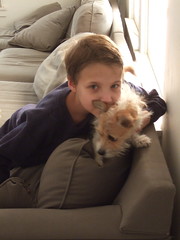
I had to have people there to keep me on task. And my people were vanishing, going on a mission. I succumbed and joined in the proceedings inside the front house. Mike was wolfing down his dinner and Jennifer was combing Addison's washed hair and packing. I asked Addison if I could get a picture of him with his dog, Cupcake. He sportingly obliged. He was as excited as if he were going on vacation.

At nightfall, Jennifer came home. (No family were allowed during shift changes.) She told me the kidney donor was a 24 year old who had died in childbirth.

"How 19th century," I said pausing to take this in.

"They said Addison would grow into the kidneys," she explained since I was part of the family now. I questioned her about her confidence in his doctor. I didn't want the kid to die on me now that I was invested. She had complete confidence in him; didn't seem worried at all.

I was so struck by my happening to be there for this momentous occasion that I felt somehow powerful as if I had brought them this good luck. I mean what were the chances that I would be there just when they got the kidney? Such is the hubris of a writer living inside a story. After a while, I felt like a bystander again and went back to lining shelves.

In the morning I got news that it had all gone well. Whew. He would come home in three weeks, then had to be kept germ free in isolation for three months, so no school. I packed my car and Mike and I settled up our accounts.

Build Your Own Family

In the days following, my work helping a hoarder client sort through ten-year-old copies of People magazine couldn't have seemed more meaningless. My mind was with a boy struggling to accept a major organ transplant. And I still had to rent the second house. The applicants I had were not quite right. They didn't really feel like they were part of the story.

Yet, this was my target market. Having positioned myself just to the sidelines of the foreclosure epicenter, I was poised to catch the falling middle class, complete with all their pets, amenity needs, oversize furniture and big appliances and yes, their shaky credit rating. Otherwise I was getting a lot of calls from people looking for the rock bottom price. Or they were young with much to learn about taking care of property. One man spoke only Spanish, but all I could say was "si, casa" and the price in English numbers. $1000 a month was too high for him. Low prices hovered around $750. Down the street a newly renovated house was selling for $45K. That was about what we had put in to renovate. Real estate gurus were telling their investors to flip not hold for there would soon be more bargains.

Though I was prepared to lower the rent, I thought I'd wait a bit. There were plenty of landlords lowering their rent steeply as the glut of foreclosed properties turned around and were up for rent again. Soon they'd be gone. We had put a lot of work into our houses. I wanted people who wanted a nice home over a cheap dump.

I called Mike. Told him that what I really wanted was for the tenants in the back house to be okay with him and right for the situation he had there. Would he interview these candidates? He was glad to. Called back, said Joe was probably not the right guy and besides he had let slip that he would move on soon; the second family with the 6 pets, he couldn't reach. Was that going to be it for the month?

I tried to think of ways to advertise. The population didn't seem to go much by Craigslist. A digital divide perhaps. I discovered Rent.com; none of the many houses I had seen for rent were even listed there. I posted ours. Three days and four leads later, a man called me up moments after I left him a message.

"Amanda, I want to rent your house, but I'm afraid you will have rented it before I even get to see it," he said as if we were best friends already. "My name is Italo, but everyone calls me Tally," he continued in a familiar drawl. I felt like I was listening to a character in a movie. Well no wonder— he was from the Bronx—an Italian. He went on to tell me how a friend had suggested he go onto Rent.com "and there you were, the only house in town". He liked the pictures of it, but he had to leave for two days for his work. The man had a job!

Yes, for UPS for 18 years. His wife had divorced him; he'd given her nearly everything, plus the house had an underwater mortgage and now the apartment complex where he was living was kicking him out because his 19-year-old son had brought home a dog.

He just wanted to get his life back together again, he told me. I hoped he wouldn't be put off by the seediness of the neighborhood. I e-mailed Mike and Jennifer telling them how nice he was.

He saw it, he liked it, his kid liked it. He didn't mind the seediness, after all he was from the Bronx. He knew that people looked out for each other in these poorer neighborhoods. He even remembered an outdoor clothes line same as the one out back. Mike had liked him so much he gave him a hug and told him he belonged there. By the end of the weekend Tally was wooing me with recordings of his impressions of Elvis, pictures included. If Catherine was okay with his obliterated credit rating it was a go.

"Let's give him a chance," she e-mailed me. I had gotten a terrific reference from his boss ("wish all my guys were like him") and his credit history was the norm now.

Finally, I could lay my story to rest. My new extended family had attained a harmonious configuration and the little homestead would give us all a chance for resurrection. Tally was so grateful he said I was an angel. Well I wouldn't go that far, but after just six months of this odyssey my story was closing with just the happy ending I had been looking for.

Labels: , , ,

Friday, July 17, 2009

Must Love Dogs (And Cats)

In which I transition from a devoted cat person to being a dog's best friend.

As an avowed cat person, I have been able to ignore the world of dogs nearly completely. Any contact I did have with a dog quickly assured me of the superiority of the cat as a pet. When I moved in with Catherine, she had both a dog and a cat (and a husband). The cat was an exotic Abyssinian with a distinct personality; the dog a Manchester Terrier with boundless energy that made answering the door a challenge. The two were friends, playing together, chasing each other sporadically, then lying about the house stylishly showing off their pure bred lines. Dutch, the Manchester Terrier had the same markings as a Doberman and the same cut ears, but was petite and delicate. She was bred to hunt rats and had the high energy of her breed; she would race in circles around our small yard. A year later, as part of the divorce settlement, she went with the husband leaving Tango to beat me into submission.


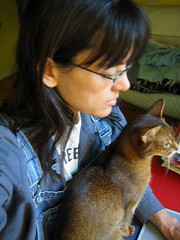
I had never met such a persistent and strong willed cat. She woke me every morning at six by standing on my head and if that didn't work she would jump on the floor very loudly, repeatedly. Finally she would meow in a commanding voice waking Catherine, which would make her cranky so I was trained to get up before it came to that. I was an early riser anyway. After her breakfast (not infrequently followed by upchucking her food in some inconvenient place), Tango would insist on getting into my lap when I was at my desk typing. No matter how many times I put her on the floor, she was back in my lap again. I gave up and perfected a leaning posture that allowed me to type while she sat against my stomach looking out the window. I still had to keep her from walking on the keys, but we came to a compromise. She could sit up to the keyboard as long as she kept her paws on the gel pads of my wrist rest. After a decade of this delicate balance, sitting with Tango at my keyboard became my favorite part of living with her. My writing was informed by her feline energy.

Two years ago we discovered that her kidneys were failing and were advised to give her fluids through an IV drip every other day plus a regimen of antibiotics. We took separate vacations so one of us would always be home to administer the drip with the help of a friend enlisted to hold the cat, rolled up like a burrito in a towel, so she couldn't escape or claw us while we poked the needle into the folds of skin on her neck.

The kidney disease slowed her down some, but it wasn't until the final week that she was not her usual active self. And it wasn't until the last three days that she was truly disabled. Those last three days were the saddest, most profound moments of my life. It was only then that I realized that the cat loved me beyond having trained me to be her servant, for even when I could do nothing for her, she would purr if I stroked her head and rub her face against mine reassuringly. When she refused food and wouldn't sleep or close her eyes at all, we knew it was time. The next day she wouldn't move and we took her in to have her put down and say goodbye.

Her passing left a cat shaped hole in our hearts. Her tiny 7lb presence had so filled the house that adopting another cat just wouldn't have been the same. It was then that I relented and suggested that we could maybe get a dog. Catherine had been talking about getting a dog for ten years and every time she mentioned it I had put my foot down or asked if she was going to take it to work with her. Dogs, I knew would not tolerate being left alone and they had to be walked, not my favorite mode of transport. But given all that we did for Tango, a dog wouldn't be that much more trouble. And with Tango gone I felt as though I had lost, not only a dear friend, but a job as a nurse that made me feel essential to the well being of the household. In my mind, my status felt tentative and without an anchor.

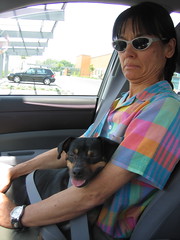
About a year ago my carpool buddy, Mary, adopted a chihauha/miniature pinscher mix and took it everywhere with her, even to clients. When I first got into the car with Squirt she asked if I wanted him to sit in my lap. I declined in horror. Eww, dog germs. And he barked his head off on another day when I came out of the house wearing a rabbit fur hat, but Mary had taken him to obedience school and kept him firmly under control so I had no complaints. When we drove to Nevada to the national conference I sat in the back seat and there grew accustomed to having a dog as a peer, as I was happy just to get a ride on such short notice. He started coming to our house with Mary to watch videos about organizing and hoarders, thus aclimatizing me further. When Tango was gone I was so happy just to have an animal recognize me and be glad to see me that Squirt became my new best friend with his floppy ears and perpetually entertaining antics.


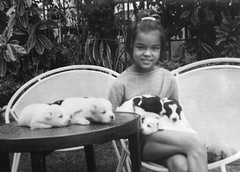
When it became clear that getting a dog was an imperative and not just a maybe, I sat down to the task and read an armload of books on the topic while Catherine and I watched episodes of Cesar Milan's the Dog Whisperer. Dog training brought out the disciplinarian British nanny in me. I realized that I didn't have a problem with dogs per se, after all, I had grown up with several on the compound in Thailand and helped raise a litter of puppies when I was nine; it was with dog owners with whom I had a bone to pick.

I made my demands clear. We would have a dog that was well trained, wasn't aggressive, liked cats, had good manners and didn't bark a lot. Catherine was interested in a Jack Russell Terrier; she liked how they looked had seen the one on Frazier always getting the last laugh. Plus she wanted to get it as a puppy since she felt this was the best opportunity to bond with a dog and make sure you could brush its teeth. (Besides, as we had seen, the shelters were full of pit bulls and chihauhas.) A puppy! This was all going too fast and I hadn't finished all my reading. I called a professional dog walker for advice; she mentioned that it was very important to train a puppy "bite inhibition". I'd never heard of the term. Now I was really overwhelmed. If we got this wrong we would create a monster.

In Bangkok, I had a friend who whose dog bit me. She loved her dogs, but seemed to know nothing about them, just fawned over them much like I'd seen other dog owners do. When she and I were growing up, dogs were allowed to run lose as has been the custom between humans and dogs living together in villages for eons. At our house the gates were rarely closed, so the dogs ran all over the neighborhood and were happy, well-adjusted, friendly dogs (until they got run over by cars). As Bangkok grew more developed and crime ridden, the wealthy built high cement walls and closed their gates. Now the dogs were not only confined, but were encouraged to be aggressive to strangers, for their primary role were as guard dogs.

The first time I was bitten by dogs, at age fifteen, I wasn't frightened I was in awe. I'd never seen such elegant dogs; they were a pair of Dobermans bearing down on me at a run. Each got a nip in before their owners called them off. The skin wasn't broken, just bruised and the remedy my aunt administered hurt more than the actual biting. I was impressed that the dogs retreated as soon as they heard the command, but I would never forget that dogs, all dogs were potential killers armed with teeth.

My friend's dog was not so well trained. When I came into her house he set to barking furiously. She thought I should give him a treat saying he was probably hungry. This didn't seem right, but I followed her lead and offered him the treat stick. Seeing me approach, he lunged at me and bit my leg, breaking skin. I did nothing. Later I showed off my wound to her friends as a scar of battle, but I was not happy. I wished the dog dead. It lives still—in a cage. Apparently it had bitten someone before—a worker who had come to the house. That was all right, but the dog was supposed to be able to distinguish between working class and high society humans. I was not surprised that it had demoted me. I was clearly a stranger in my own land.

My new found alpha dog personality was now informed by these past grievances and I snapped at Catherine, bringing up all the past transgressions of her last dog, Dutch and the cat too. In response Catherine called off the dog project entirely and was mad at me, but I persevered and secretly watched more training videos.

The German shepherd puppies trained by the Monks of New Skete won me over. They were adorable and the monks were so gentle, yet firm, assuring me that dogs would naturally respond in a civilized manner if some simple training was invested in their upbringing. They emphasized what a privilege it was to develop such a bond with another species. I felt I would be missing out if I didn't try it. When else would I ever have such an opportunity? Just thinking about a dog banished all my thoughts about the coming apocalypse. In fact a dog might be just the thing for the apocalypse to help guard the house and protect us. They were even nomadic should it come to that.


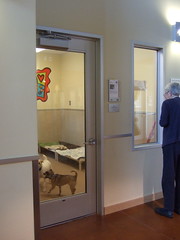
We worked it out and decided to look for a more mellow breed like a Beagle. I put my boat making plans aside and built a dog pen. Before going to check out a litter of Beagle pups, we stopped at the swanky new Silicon Valley Humane Society. The facility was impressively appointed; each dog had its own dorm room. They had no puppies, but as we were there anyway we asked to see two dogs. Catherine picked out a mocha colored Chihauha named Hershey and I opted for Myles the Miniature Pinscher mix.

Hershey was cute, but shy. Catherine got her to sit in her lap and I snapped a picture. Myles was a wriggling ball of energy; he came straight to me, put his paws on my knee and looked at me. I spontaneously grabbed his head, looked into his face and said, "Are you my dog?" Then he was off, throwing a toy into the air and leaping waist high. And just as I was beginning to think that he was too hyper, he got on the ottoman I was sitting on, lay down beside me, rolled over and offered his stomach for me to pet. I did. From all our reading we knew this was a positive sign of submission. He was two years old, a stray; his history unknown.

I admired his powerful body and his black and brown markings just like a Doberman. Catherine liked his puppy friendliness and thought he was a cool dog. Then we thought better of it. He was so high energy and might be too aggressive as a male dog.

We left to visit the Beagle pups. They were living in an Asian family's back yard with the mother. Three bundles of puppy chaos streamed out towards us, making for the food bowl; all were female. They were cute all right, but a handful of uncontrolled energy. The mother was mellow and not very big. I thought we could handle such a dog, but I was still drawn to the athletic Myles. He might actually pull me on my scooter, he was so strong, and dog scootering was an actual sport just like dog sledding. I was quite taken by the idea.


Catherine wanted me to make the choice so I would be equally invested and enthusiastic about our pick. When I chose Myles, she had no hesitation either and back we went to claim him. It tickled her that I had picked a dog so much like Dutch with whom I had so many complaints. I was still cautious about how such a commitment would impact my life, but I was ready to try and Myles had more pluses than minuses. He turned out to be house trained; he loved to cuddle which pleased Catherine; he pulled on his leash all the way home when I walked him which was good and bad; he didn't bark until he saw a cat in the yard so we would have to work on that, but most of all I was proud to be seen with such a fine animal.

I had felt the same way wearing a cowboy hat and riding a horse in Woodside. It gave me a legitimacy to belong to this American class of dog owners walking their dogs; it overpowered my sense of being a minority in a mostly white, wealthy neighborhood. It gave me a cover for trash picking and checking out other people's houses. It was nearly as legitimizing as being a parent for a quarter of the trouble. I felt primed to train this dog—participate in the dog community. Then I could hold my own in this competitive, family oriented culture, even sport a bumper sticker declaring "my dog is smarter than your honor student". Yes, good boy Myles.

Labels: , ,

Wednesday, September 19, 2007

Truths My Father Told Me

The year I learned how to draw a peace symbol, I made one out of pipe cleaner and put it on our door as a party decoration in lieu of a Christmas wreath. My parents had fun parties full of liberal young people they knew from work. I was allowed to attend the parties and expected to make myself useful with the food and decorations. That year I opened the door to a man from my father's work at Stanford Research Institute (SRI).

"Isn't that a little hypocritical?" he said of the peace symbol, chuckling as he came through the door with his wife. It was 1972 and this was not my first clue that my father's business was the art of war, but it was the first time I understood that one was supposed to have an awareness of how such work impacted peace. I was in junior high at the time.


I asked my father about his work at my next opportunity alone with him. He was sitting in one of our swiveling, black vinyl chairs with the chrome legs. In his hand a globe shaped tumbler we got free from the gas station with every fill-up. I sat on the floor, Thai style with my feet tucked under, preferring to look up at him, respectfully, as I had been trained to do by my grandmother.

"Do you make bombs, Daddy?" I asked. I felt conspiratorial asking the question, ready for one of his wry answers like the one he offered when I asked him about the origin of Christmas when I was ten. Christmas, he told me, was invented by shopkeepers to get people to buy things.

"Don't tell her that," my mother had interrupted, offended even though she had rejected her Church of England upbringing. So she told me the story of Jesus Christ, which was nice, but kind of boring. I thought Christmas was all about Santa Claus, so my father's answer had more to offer. My mother wasn't within earshot for his answer about the bombs. With a slight smile, he said "No, I don't make bombs, I make the missiles that get them there."

I was somewhat relieved that I wouldn't have to say my daddy made bombs, but I also understood in that definition that lots of daddies were part of what I would come to learn was the defense industry and that this kind of work was a permanent part of modern life. We were, after all, in Silicon Valley, which before the wonders of the personal computer, had to work harder to cover this more ominous dark side. Now that I was in the know, I could learn to live with it as wryly as my father.

My mother upheld the humanitarian values in our house. She did not speak of my father's work, only told me that he had been to military school from the age of six. In our photo albums I looked at the pictures of my father in his Thai airforce uniform. He never saw combat. He used his engineering skills to help the Americans listen for troop movement on the Ho Chi Min Trail. I helped him test his equipment by walking our puppy up and down the lawn while he listened on his headphones.

That must have been about the time, he took a job in reconnaissance with SRI, which had a branch in Bangkok. This opened up the possibility of our immigrating to the US, which we did in 1968. Once here, my dad became a US citizen to be eligible for top-secret clearance. (My mother became a citizen, at the same time, to be eligible for government grants to work with disabled children, while I hung onto my British citizenship. Eventually I chose to become an American citizen to protect my right to free speech and to vote Reagan out of office.)

Shortly after we had settled in the US, my father took me to an open house at SRI in Menlo Park when I was 11 or so. They had a couple of chimpanzees in a cage playing with a football, but more exciting was the underwater rat maze. A scientist in his lab coat demonstrated this study with one of his star rats, while a group of us watched in breathless silence as the rat swam rapidly under the glass until he made it to the end and was fished out. The whole point of the exercise seemed to be to find out how quickly the rat would learn under pressure. Someone asked what happened if a rat didn't make it. The scientist smiled a half apologetic, but-I'm-just-doing-my-job smile, and said that they covered the tank until the rat could be taken out.

I did not question why this experiment had to be done in the first place, since this learning-under-pressure situation reflected the condition I knew as school. The man who asked the question was just not in the know—that death was inevitable and some were in the business of making it happen. (The key, I concluded, when I was old enough to make life choices, was not to get yourself in the maze in the first place, not to be obligated to anyone for your survival, not go into debt, not be forced to remain in the closet to keep a job. I wanted my freedom dammit.)

As protests against the Vietnam War heated up, students from Stanford University decided to stage a protest at SRI because of the defense work it was doing. My father was nervous that they would throw rocks or worse, but he came home laughing at the whole incident and described how the students were just sitting on the lawn and the building manager turned on the sprinklers, which got rid of most of them. Stanford University did drop its affiliation with SRI, which changed its name to SRI International. My father counted this as a victory, pleased that a band of peaceniks were not going to shut down his place of work and now they even had the prestige of being a global corporation.


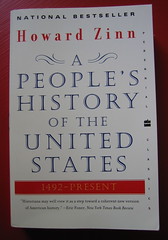
Meanwhile, I had caught a glimpse of the peace movement, which I would later join having heard enough of how the long term consequences of the Vietnam war had impacted the people of South East Asia, from land mine victims, to the growth of the sex trade in Bangkok to accommodate American soldiers on leave, to the affects of agent Orange on those exposed, to the killing fields of Cambodia. And then to find out, when I read "A People's History of the United States", that the war didn't even have to happen because the whole Gulf of Tonkin incident was a lie.

Where I could not get past the wrenching empathy I had for the Vietnamese and Cambodian people (who were being portrayed in movies by Thai people so looked even more like family), my father was able to see everyone as a potential enemy even family. My mother left him as soon as I was out of the house. He managed to snare two more wives, but he had only one friend to his name, a proud father of a marine.

On the eve of the Persian Gulf war, he found it amusing that I was marching in peace marches, so sure was he that he would be on the winning side—the side that got to go to war. While I, righteous as I was with the total wrongness of it, would be on the losing side, the side of the peace movement. I was puzzled because I was clearly winning the moral argument, but he didn't seem to care at all about the bombing of citizens and the destruction of a country.

Then he let slip that he had a project he wanted to test which would bring him recognition at work. This was the heads-up display he was working on for Kaiser Aeronautics. As my father described it, this display would be used in helmets to allow pilots to fly and shoot without having to look down at the instrument panel. He was hoping he would get to go to Iraq to see it in use by helicopter pilots. This, I realized, was a man who loved his work. He did get his war and the accolades that went with it including a US patent for his work on the display.

It was true, he had never given much credence for the reasons that were given to go to war, not even the good war. He did tell me that US intelligence had known about the coming attack on Pearl Harbor and that it was allowed to happen to convince the American people of the necessity for a response. The day of the 9/11 "attacks", I asked him what he thought would happen. "We bomb Afghanistan", he replied without a second thought.

His truth spared me the stories of national security and the terrorist threat that were on the lips of our leaders. My father lived in a world that assumed constant war making. War was how nations got the resources it wanted, his outlook implied. (Tin and rubber it had been in South East Asia not communism.) It was just that not many were admitting it quite like my father did. What chance did peace have against a whole industry of people excited by destruction and the desire to win to the point of annihilation, not to mention the arm-everybody consequences of the arms trade?

I spoke no more of peace to him, only shared news about the family in Thailand. Often he would ask me to proofread a letter he had written to one business or another complaining about a product malfunction or customer service error. When his second wife left him he sent me to the deposition with the lawyers to make sure she wasn't going to cheat him. (I never let on to her my purpose for that appearance.) I also found myself mediating for him when his live-in maid from Thailand refused to speak to him. We did share some common ground in our interest in tools and he was able to help me fix things, but when he suffered a recurrence of his throat cancer (attributed to smoking), I was secretly relieved that he might not be around much longer; that I would actually be able to live the second half of my life without having to bridge his nihilistic perspective.

The final truth that my father revealed was that his battle-ready stance would not help him in his fight against cancer. He had been a fit man and the doctors were confident that he would live several more years once he got past the surgery, even though the cancer was not eradicated. He wouldn't fight at all, but lay defeated, wishing to die; refusing to do anything the doctors told him to do to aid in his recovery. We who cared for him thought that he might gain strength if he adopted his usual strategy of plotting revenge. We urged him to recover so he could sue his doctor. (He did fault the original radiation treatment for causing the recurrence that produced a tumor in his neck.) But revenge didn't interest him if he still had cancer. For him the battle was already lost. He had nothing to fight for. In the end he died (in 2002) of pneumonia, the default death.

I was free, then, to study war no more, but I had acquired a taste for it. The US launched its invasion of Iraq, spinning lies I wasn't about to believe. As it dragged on, I wanted to know what was really motivating our administration, how far they would go to control the Middle East and if peace was even relevant in the face of empire building.


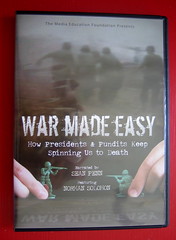
"I'll just settle for knowing the truth before I die," I told a peace activist at a recent lecture by Norman Solomon, author of the book "War Made Easy", now a critically acclaimed film. And does the truth set you free? No it just makes you feel like you're part of the in-the-know crowd. Is the peace movement dead? Not if you consider that the US has not dropped another nuke since Nagasaki for fear of the response of the American people. Will we end the illegal occupation of Iraq? (It's illegal for an occupying nation to change the existing laws of a country being occupied.) Only when multi-national (American) corporations have made every last deal there is to make in the privatization of Iraq's nationalized industries (not just oil). Same as happened in Yugoslavia.


Check out these movies for more on the business of war-making:

War Made Easy: How Presidents and Pundits Keep Spinning Us to Death: Documentary about the use of propaganda by our leaders and the media to persuade us that war is the only answer. Now playing in theatres. Or you can borrow the DVD from me.

No End In Sight: This recent film is considered to be the definitive documentary of the war in Iraq. One of the clearest, non-political explanations of what went wrong and who is responsible.

Fog of War: Eleven Lessons From The Life of Robert S. McNamara. An Oscar winning documentary interviewing Robert McNamara regarding the decisions made in the war in Vietnam. A telling film about how our best and brightest justify war.

Lord of War: An arms trader, who is also a father, contemplates the morality of his work in this wry drama starring Nicolas Cage. Serves as an uncanny reflection of our attitude as a nation that has become the world's largest arms exporter. Arms manufacturing is one of our nations largest industries.

Labels: , , ,

Earthworm. Get yours at bighugelabs.com