Amanda Kovattana

Middle-aged musings in interesting times

Sunday, July 19, 2026

While in Amsterdam I read about Kinderdijk, and that I could get to it by bike from Rotterdam. It was another Amanda adventure as I pursued my passion for preindustrial tech at this UNESCO windmill site. Plus I discovered that windmills are tiny houses! Who knew?
I read a travelers notes about the UNESCO site that told me you could get there by taking the train to Rotterdam then riding a bicycle to Kinderdijk. There was a guided tour offered for $500 as a bicycle ride from Rotterdam for a half day event, so I thought I ought to be able to manage that on my own with my new skills using Apple Maps. All I had to do was copy the address from the tour’s itinerary.
I could take the bike on transit with it’s own ticket. Leaving at noon I arrived in Rotterdam where I took out my lunch of Gouda cheese, salami sticks and mixed nuts while I contemplated the route ahead which I had studied view-by-view the night before.


My phone was leashed around my neck and could sit happily in the inside pocket of my jacket where I could hear the directions just fine. In this fashion I managed to get out of town onto a country road. As I rode along I saw a man, a Black man with his bike parked by the side of the road eating blackberries from a hedge. 
I stopped to do the same. Those were the sweetest berries I had ever tasted, and I decided to take a picture of this roadside eatery. That’s when the low power notification flashed on my screen. I got out my back-up power bank and looked for my cord. I couldn’t find it anywhere. In a panic I struggled to shut off the map app, figured out how to lower power usage on my iPhone, and shut off the phone. 


Then I stood there for a long time contemplating my options. I could play it safe and turn back, but the object of my quest was too compelling. Even if I did come this way again it wouldn’t be for another year. I had given the route a hurried looking over before I shut off the phone. I saw that it followed the canal all the rest of the way on a bike path. It was 3:11 p.m. My arrival time had said 3:36 p.m. given that I didn’t get lost. I had to try at least. 

So I set off. I was going great for miles and then the path seemed to merge with the highway and there were too many choices of bike paths. I followed other cyclists into an underpass. The signpost said Centrum a word I’d seen before. I asked a man sitting on a rock which way to the windmills. He shrugged raising his hands in the I don’t speak English gesture. I mimed windmills with my arms and he shrugged again and we both laughed.
I followed a cycling couple in full cycling gear including helmets. No one wears helmets here except with those racing bicycles.
“Hello can you tell me how to get to the UNESCO windmill site?” I asked. 
“Oh you mean Kinderdijk.”
“Yes, yes.” I said enthusiastically. I couldn’t pronounce the name so hadn’t said it.
“It’s a long way from here,” said the man hoping to discourage me on me townie bike.
“I have already come a long way. I came from Rotterdam,” I said which was three times the distance. “But my phone died and I can’t find it now,” I explained. He looked at his wife and she took over while he went into the Lilly snack shop.
“This is Krimpen aan den I Jissel,” she said painting to the ground, “and you want to take the road to Krimpen aan de Lek,” she said pointing in the general direction. The terrified look on my face prompted her to take out her phone so she could show me the road. 
“And how do I get to that road?” I asked. She described the route, I had just come, under the underpass to this Centrum, which I realized meant shopping mall or maybe city center.
“Oh that’s where I went wrong,” I said. I repeated the name of my destination thanked her profusely and headed off. Between a little jissel and a lot of luck, I would find my way.
I knew that my journey entailed a ferry ride across the river. I just had to find the ferry. I wasn’t seeing it. One more ask of an elder man walking on the path and I was pointed down the road I had just crossed. Down that road a piece and I found the line of cars for the ferry along with another cycling couple in street clothes who were smiling at me. OMG, friendly Dutch people! They were looking at me just waiting for an introduction.
“I’m going to the windmills,” I said elated. “I rode all the way from Rotterdam on this beast,” I added thumping the saddle. They laughed and asked where I was from. I told them San Francisco and we chatted a bit about the high cost of Bay Area housing, the tech giants with their large compounds, and why people were choosing to move here to Europe. I asked if they were locals. Yes. Just one town over. When we got to the other side they kindly escorted me to the correct left hand turn to get to my destination.


Kinderdijk is basically an island, surrounded by a canal, with 16 original windmills and a working mill. The museum part had a working pumping station to move water in the canal, and a movie theater building that showed a sophisticated animation without words about the movement of water and what was built to handle the floods. 

An American woman, with a Southern accent, taught me and others how to play with the site’s model to turn all the windmills so the blades would turn with the wind. Once all the blades of the windmills were spinning you got a smilie face lit up. We had a spirited game of it. I just had to see the inside of a windmill and then I would be satisfied.


Since I refused to get on the hop-on/hop-off boat and be stuck with a crowd of people at every site, I set out on my bike getting lost every which way until I finally found a path that accessed one of the two windmills. It was just about closing time, but as they were still waiting for one more tour group, they let me in so I could examine this tiny house windmill.


Every detail satisfied me with its authenticity, down to the hand crank Singer sewing machine. The ladders up each level reminded me of my own loft ladder. There were different bedrooms and a sitting room which was the only room heated. Same in my house. I could easily imagine living there except for the constant cranking noise of the wood gears of the blade. I bet they knew what was going on outside with every sound change. I inspected the fully equipped wood shop, delighted at the duck pen, and was pleased at the size of the vegetables in the garden. 


I didn’t get to see inside the mill or the other windmill, but I was satisfied and this would give me a reason to come back.

My legs were aching so badly by this time that I really did not want to ride all the way back to Rotterdam. I pictured a nice train I could board with the bike. Meanwhile I was miles down the road when I realized I was going the wrong way and turned back. It was amazing I could still ride though it hurt to sit down on the saddle.
I could not find the ferry to get across the river again and I was yelling “ferry” to every cyclist I passed hoping for some information. One woman yelled “ferry” back but did not stop. I got back to the Kinderjilk road to ask someone and found that I had missed the last ferry an hour ago. This could be really bad I thought, as the wind picked up. I rode on a bit further and found people waiting at a bus stop. 
There were tourists who would know nothing. I looked for a local and saw a young person looking at her phone. Now that I knew that Dutch teenagers had six languages stuffed into their heads, I was confident she could help me. She was a brown person  wearing a hijab. I was a brown person wearing my Lawrence of Arabia hat which had blown back so that the flaps that were snapped together rested at my chin. I pushed my bike in front of her.
“Hello,” I said, “Can I ask you a question?”
“Sure,” she said.
“Can I put this bike on that bus,” I said pointing to the bus stop sign.
“No,” she said sadly, “but you could lock it up and come back for it tomorrow.” Her English had an English accent that comforted me.
“That would be a long way to come. I rode from Rotterdam,” I explained.
“You could ride to Rotterdam from here. I’ve done it, but I don’t know the way,” she said. “There’s a bike rental place down there,” she pointed. “They could tell you.”
“It’s probably closed,” I said steeling myself.
“No it’s still open,” she assured me. I crossed the street and started going towards the street level building. It looked abandoned.
“Not that one,” she called out to me. “Down there”, she pointed to a driveway that tracked way below the dike we were standing on. I saw the bikes and walked down the dirt road to the bike rental shop. 

A man came out as if expecting me. A brown man, possibly Pakistani. Maybe he had gotten a text from the brown people’s network. Ok, the girl.
“Can I help you,” he said. 
“Yes. I’m afraid I’ve gotten myself into trouble,” I said and explained about missing the ferry and the phone going dead and needing to get back to Rotterdam. He invited me to come in and charge my phone.
“It’s an old phone that uses a fire wire cable,” I said.

“Well that’s the same as mine,” he said offering the cable end to me. Miracle of miracles. He and the other bike shop attendant, a Dutch fellow of European descent, discussed my many options.
“Where did you come from” the Dutch fellow asked. 
“San Francisco,” I said and they both laughed.

“That’s a long way to come on a bike.” Ha ha. But he knew to ask that my final destination was Amsterdam not Rotterdam so adjusted the plan accordingly. There was a boat I could take up the river 8 minutes up the road, which would take me to Dordrecht. There another 8 minute ride would get me to the train station which would get me to Amsterdam.


My original helper gave me a piece of paper to write down directions, a map upon which he circled all my destinations, and finally he gave me the fire wire cable when I showed him my back-up power bank for which I had somehow forgotten or lost my cable for it. I was astonished. That would help me immensely from getting lost again.
“You are so kind,” I said.
“Next time come and rent a bicycle from us,” he said.
“I will and I’ll bring others,” I said as a gesture of my gratitude for his help.
I enjoyed the slow boat up the river and had a final angel help me as I attempted to get the bike through the gate at the train station because the ticket I was using was for another system. The younger station attendant came out to figure out my problem and went to the ticket kiosk to get a ticket out for me himself. An express ticket to Amsterdam.
“I suppose I’ll have to wait a while for it” I said as I stood on the platform. He looked at his hand held schedule device. 
“There’s one coming in one minute,” he said.
“That’s miraculous,” I said and thanked him profusely.
It was 10 p.m. by the time I got to my hostel, but it was still light out which was the final gift of these long Northern days and why I knew it would all work out somehow.

Labels: ,

Monday, January 27, 2025

The Influencer

“How did we get all these Chinese people?” I asked my farm partner, Clasina, when I landed in Northern Thailand a few days before our scheduled ten-day building workshop on our farm, Lost Boots. So named because Clasina lost a boot in the mud while attempting to install a pipe on the pond's bank. The locals called it the farm next to the crematorium. The Thais feared ghosts, so they were likely happy to have us own the property that hosted the crematorium. During the first build, we ran a homemade extension cord through the forest to one of the bathrooms at the crematorium so we could have power. Now we had solar power so we didn’t need to.

“Yidan,” Clasina said in answer to my question about the 9 workshop participants from China, “the Chinese influencer who did the video tour of Maggi’s house.” Maggi was our workshop teacher, a 77-year-old English woman with considerable natural building experience who had created a zero-carbon footprint home for herself. This house was the crowning achievement of her building career incorporating a self-regulating interior temperature, a rain catchment system, skylights made of car windshields, and a pair of revolving air vents that topped the two domes of her roof giving it a circus tent appearance. The house was in Chiang Dao, a resort area in the mountains 90 minutes from Lost Boots. 

Maggi operated a B&B in another part of Chiang Dao with a spectacular mountain view. Guests stayed in the many roundhouses she built on land she purchased. She sold the enterprise before building her final home on land she leases from a Thai friend Noot, who came to help us build. We also welcomed back our lesbian couple, Gege and Aleks. They, too, had found us last year through Yidan’s videos.

I wondered if, Yidan, did videos like the Asian woman who built a tea house from scratch and then served tea to her mother. It was so charming a concept and so captivating to watch her build with just hand tools that it went viral. (Later I found out her videos were supported by an entire crew of professionals.)

Clasina rented some serious tent pop-ups for the lecture and presentation that Maggi, an innovator of tropical natural building techniques, would present. In addition, we had Grant a gay man from New Zealand who met Clasina at a permaculture conference. Permaculture was a philosophy that encompassed sustainable agriculture focused on food forests. His last professional role was as the headmaster and director of an international school in Thailand. Upon their arrival, he gave our camper guests a tour and orientation of the onsite details, which included protocols for the use of the bucket flush toilets, bucket showers, individual solar lanterns, and tent set-up. 

Clasina’s husband Panya and our hired cook, Oy, were our onsite camp and kitchen support. A familiar helper came for the day to help with meals and clean-up as well as building. Drinking and cooking water, in reusable heavy-duty plastic bottles, was delivered by the case. Water for the bucket baths pumped up from where it sits, in the canal around the original rice field. Pumped with solar power to the gravity feed tank placed on the hill above the newly built shower stalls. The water was filtered before entering the tank and warmed by the sun.

At our introductory presentation, we asked the participants to tell us of their building experience. There was the usual range from none at all to having already built various tiny houses and cob houses. They expressed a desire for simplicity, for community with like-minded permaculture practitioners, and a recognition that the rapid urbanization of Asia was not for them. Some brought friends with them who wanted to do something different away from being online. 

One woman, living in Shanghai, came to get away from the stress of urban living. I later learned that she had a start-up business in public health and wanted to build a health and wellness center using natural building techniques. Her enterprise catered to companies who wanted to relieve the stress and unhappiness of their employees. This was an idea she adopted from a Mayo Clinic’s model. The Chinese government, who were now concerned with the stress level and unhappiness of their urban workers, were giving out grants to any enterprise that aimed to alleviate this stress and she had gotten enough money to hire 30 employees. Her phone cover was embossed with the message in Chinese and English “The Cause of Communism Needs Me”. That did give me pause. Was this more user-friendly communism doing better than any of our top-heavy non-profit organizations to alleviate social problems?

Another city dweller, one of the young men, tutored English as a second language mostly to students wishing to enter universities overseas, but not to the States, but to the UK. He served as an interpreter for his friend who had little English and also offered his talents to others in the group. It was a beautiful thing to watch this cooperation. It made me feel like I was in a Chinese movie but without subtitles.

Last year we held our build for women only so a man (whose Chinese name was Fafa so we didn’t know if man or woman) had to be turned away and wait a year. Now he was here going by the name Leo. Many of the Chinese participants had adopted Western names to better navigate this Englishness of the West. The English tutor had taken the name Ethan (in admiration of Ethan Hawk an actor) and dyed his hair blond. They were thirty-something, and so eager to help when asked to unload cases of water. As befitting Asian culture I felt their deference to their elders and to group harmony except when it came to food which they helped themselves to with little awareness of how much there was and if everyone would get a share Clasina complained to me. She soon corrected them on that matter.

On the second day, we were joined by Andrea, a German friend of Maggi’s, who had just bought land in the area and would be embarking on her own building journey.  

After the breakfast presentation, we proceeded to give our first hands-on learning task which was a demonstration of roof thatching which we did on the bamboo structure of the loo. Since I had done this task before I spent the time talking to the Chinese influencer on the surrounding grassy ground. She was in her early thirties as were most of our participants. 

She had arrived, at breakfast, in her white pick-up truck with the name of her farm on the side door with a painting of a bear figure on a scooter. I immediately noted the dog and cat riding with her. She was wearing white pants with cowboy-height brown boots and a brown flight jacket over a white camisole. I loved that she was so styling. She had come to document the build for her channel, carrying a tiny drone camera illegal in the States for privacy reasons. She also used a full-size single-lens reflex camera much like I had once carried. The dog was with her, now, quietly sitting in her lap. 

Yidan was from a rural village in China I would learn. Her mother had been a traveling seamstress who tailored clothes for the villagers before off-the-rack clothing became available much as was the case in Thailand when I was a child. She, and her generation, had witnessed all the changes to China, in a couple of decades, that I witnessed over the last 50 years among the Southeast Asian Tiger nations.

I asked her why she had left China. She told me that Chinese men preferred their women to be no taller than 165 centimeters while she was 173 centimeters so her chances of finding a mate in China were diminished. I remembered I had met a Japanese woman with the same dilemma. Most Chinese were not eager to embrace an off-grid lifestyle, I gathered when she told me that the participants that had come to join us were rare in the population. Just like my Western friends who could not live without a flush toilet, I thought.

Her English was perfect and I quickly realized her understanding of the world, in terms of globalization trends inspiring an off-grid approach to her lifestyle, very much paralleled mine. She was doing with her video blogging, what I was doing with my writing, telling stories of inspiration from her DIY projects on her own homestead in Thailand while, at the same time, acting as an inter-cultural translator to her Chinese audience.

I was wearing my handmade Roman sandals hoping to spark conversation around them. Before I left home I had re-soled them with nails to avoid using toxic glues. I explained this to Yidan and how I kept replacing the soles and the uppers because the leather insole had taken on the shape of my feet and felt so good to wear. She totally understood how leather can do that. Grant, spotting the turquoise laces in my sandals, began to riff with Yidan about how I could market my re-solable shoes at a bespoke price while offering different colored inserts and shoelaces as an ongoing income. I laughed at this business-centered feature of my money-savvy Asian compatriots. 

Yidan, was herself, a sharp entrepreneur and had asked for her cut for every participant she brought to our workshop. We charged them a fee of 750 Euros for the privilege of learning from us as we used their labor to help us build. I could see we were being offered the opportunity to collaborate with Yidan and I listened eagerly as she told us how Chinese parents were willing to pay handsomely for their children to get off their screens, and travel to another country to play in the mud and experience nature. I had been discussing this same problem of children and screens with mothers in my women’s group back home. How fun it would be to be the provider of a nature school experience.

Yidan was able to tell me in fifteen minutes all I wanted to know about China. What did their government tell them about the United States I asked. Oh the US is evil, she said. Same with ours I replied; it made me uncomfortable how much Americans were suspicious of China. As we wound down our conversation we were joined by, Andrea, our German expat whose English was halting but serviceable. The three of us spoke of the increasing polarization in each of our countries between Left and Right and Yidon quietly spoke the ethos of all of us as she suggested that the real work to heal our global alienation was to make bridges between groups. Hear, hear my next-generation mirror image. 

Over the ten days the more I learned and observed about our Chinese team the more they reminded me of Americans. No longer were they the ugly Chinese, of the previous generation of tourists, who had descended on Thailand in tour groups to stay in the large hotels that were built on the outskirts of Chiangmai occupying the town as if it was their own Disneyland. An American friend had told me she was physically pushed off a path by a woman from such a tour. 

No, these thirty-something Chinese were quieter and savvier. They liked American movies and music. They wore our brands, Columbia jackets, hoodies, sweat pants with stripes up the leg, t-shirts with English words on them, and a Chinese typeface that looked like English words. Gege had the exact same pair of black Hoka's as I was wearing. “We’re twinsies, “ I said pushing up against her shoe with mine. Her girlfriend Aleks came forward to translate. “She got those shoes because of you,” she said loud enough for all to hear gesturing towards me. Awww. They were probably made in China anyway. We had even both bought them second-hand from equivalent online platforms. This internet generation put China on the rise. They reminded me of Americans in the ’90s when we were still free to speak and share ideas and fashion, before cultural appropriation and the compelled speech of diversity, equity, and inclusion silenced and divided us. The ’90s was the golden age of my American Life.

The women were also competitive in a friendly way inviting others to show their skills and being willing to laugh at themselves if they weren’t up to it. I, too, was inspired to show off my skills whether it was with kung fu moves stretching in the morning or with dance moves around the campfire in the evenings.

One morning I came to sit by the rocket stove, next to Leo who was talking to Grant about his favorite music. “Tell Amanda what your favorite song is,” Grant said to Leo. “Imagine,” he said. “John Lennon”, Grant said.“John Lennon’s Imagine?” I repeated dumbstruck. This was just so poignant given the jostling of our respective world power nations, it made me want to cry as I recalled the lyrics. 

Imagine all the people sharing all the world. You may say I’m a dreamer, but I’m not the only one. 

Now when I hear China mentioned in the news I will picture Leo learning English from an app that showed the lyrics of songs in both Chinese and English as he had shown me. Indeed all these young people I met would flesh out my thoughts of China.

Four of the Chinese girls had already left China and were living in Thailand, one working for a Thai radio station, and one for an American NGO for the environment. We met a couple of their husbands. One couple lived on a sailboat off the coast of Krabi, one of Thailand’s islands. They might be rare birds among the Chinese population, but that population was just one generation from all the practical survival skills of rural living.

Our American kids were no longer competitive with the world I thought. They needed to get off the grid, get grounded, and dispense with these narcissistic messages of identity, brain diagnosis, and food allergies. It was getting harder to work with Americans on our teams. I wasn’t ready to run away yet. I knew I would go back home to California and try to talk sense into our runaway progressivism which was running us aground with bad ideas that didn’t work. What else could I do?


Labels: , , , ,

Thursday, August 03, 2023

My New Substack: Tales on the Gender Trail

With the publication of my book The Unexpected Penis: Conversations on the Gender Trail, I have taken the opportunity to start a substack specifically for articles about gender. This will allow me to more easily network with other writers focusing on gender. Visit it here. https://amandakovattana.substack.com

I will maintain this blog for articles on topics other than gender. My articles on tiny house living are continued at http://tinyreddesk.blogspot.com.

Thank you for looking in on my work.

Amanda

Labels:

Saturday, September 10, 2022

Thailand: My Covid Report

After two years of being confined to the United States, I was relieved to finally be able to return to my home country of Thailand for a different perspective. I had been relying on this outside perspective to keep me sane during the Trump years, but once Covid hit I was stuck here with the fear. Luckily I had just returned from Thailand just before lockdown, in February of 2020, where I had already experienced life under Covid and found things to be orderly and well run with no panic buying and an acceptance of precautions as the natural course of things. After all, they had been through SARS and Bird Flu. The government had turned all decisions over to the Ministry of Health so there was a minimum of politicizing. Thailand followed what its neighboring countries were doing while working with other doctors internationally towards finding effective treatments. 

I was curious to know how my family and many friends in Thailand had experienced the pandemic. I asked everyone about their Covid-19 experience, if they were vaccinated and how they had treated their Covid case once they got it, as most everyone of my two dozen contacts had gotten it. The variety of answers I received made Thailand and its expat community look like the Cantina in Star Wars, so filled with all manner of perspectives and a variety of sources of information all mingling together in peace as befitting a cross-roads community of planetary relationships. These photos from the airport in Bangkok also tell a story. One that indicated a shift away from Western medicine. 

Gift Packs of Thai Herbal Medicines
Thailand had reported the first case of Covid outside of China; yet its death rate is one seventh that of the U.S. It is now 29th in numbers of deaths per capita in the world, with the U.S. being number one. Thailand had several lockdown protocols and a 14 day quarantine period for entry into the country and even between regions. Quarantine was reduced to three days, then lifted entirely by November of 2021 with proof of vaccination or a negative Covid test within 72 hours of arrival.

Although slow to roll out the vaccine, Thailand now has 76.5% of the population fully vaccinated and vaccination or a Covid test is required for entry. (I showed my vaccine passport at SFO before boarding my flight.) There were four vaccines offered—two Chinese ones, a British-Swedish one and Pfizer. 


Five of my contacts had refused the vaccine, firmly believing that it had potential to do harm because the technology was so new, and so few clinical trials had been done. They were smart people who had developed health regimes as part of their lifestyle. One elder expat, who found Al Jezeerra to be the best source of news, found an older flu vaccine to take that was seen to have worked with Covid. She had a mild case, once infected, and was soon over it.


Another unvaccinated, who already had an autoimmune disease, had the worse case of all my friends as it impacted her intestinal system. She followed the protocol developed by a doctor in India and took a course of Ivermectin to reduce inflammation. She recovered in due time. My cousin and her two sons, were all not vaccinated. They got a mild case of Covid and she presumably used her skills in energy medicine to treat it. Her boys tested negative in 3 days. Another friend not vaccinated got it and was over it with no special treatment in a week or so.


None who refused the vaccine were closeted about their status as this was not considered a heretical stance to take, nor were they accused of betraying the common good. The vaccine did not, after all, prevent transmission, so logically made no difference to the common good. Nor did not being vaccinated result in more people being hospitalized because doctors in Thailand urged early treatment before the body could escalate to the crisis stage requiring ventilators et al. This was also the case in many other non-first world countries.


Doctors treating Covid around the world were sharing information uploaded to an international site. They were using every medicine available to them. Ivermectin being the cheapest and most available followed by hydroxychloraquine sulfate, both used to fight malaria in hot countries. These medicines were so widely used in Africa that it was thought to be the reason why deaths were so low there. I had already perused such a site and my friends in Thailand also knew about this sharing of information. While in the U.S. it was adamantly claimed that there were no treatments available until the new Remdesivir drug came out.


Fah-Talai-Jone
An expat friend from England treated herself and her husband with the ancient Thai herbal remedy Fah-talai-jone when they got Covid. 

This herbal medicine is listed with the Ministry of Health as an official treatment for Covid 19 in Thailand. It is a very old traditional herbal medicine. "It cures anything," said my friend.


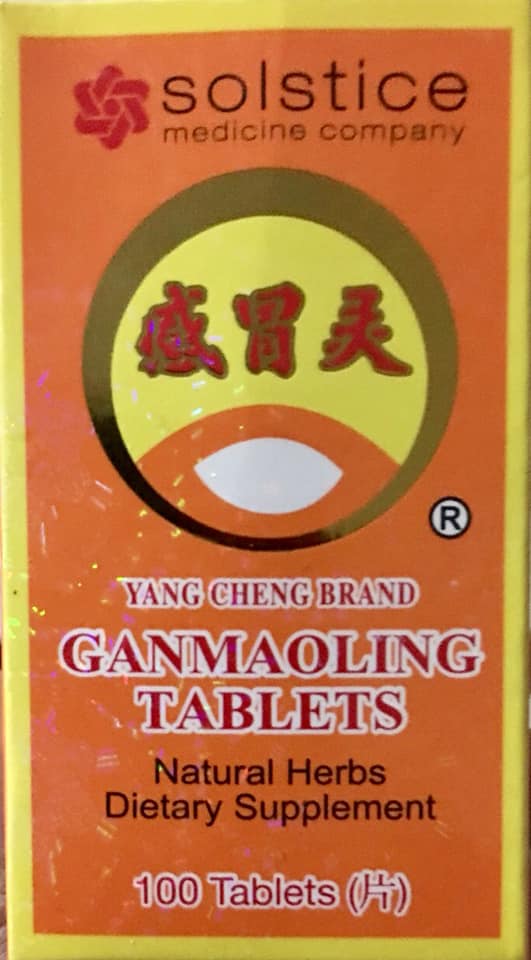
A Thai friend posted on FB that she was in quarantine because her partner had it and she was boosting her immune system with the Chinese herb Ganmoeling which she instructed me could be found in San Francisco’s Chinatown on Clement or Irving street. She posted her negative tests every few days. Few of my friends in California spoke of boosting their immune system. Few talked at all about methods to keep in good health. I was beginning to suspect that the entire American population had immune systems that sucked and said as much to an elder friend who had closely followed the CDC recommendations. He did not believe that vitamins were a proven health strategy and seemed to have few remedies for the common cold. He suffered badly from any flu that came around and would urge me to get a flu shot whenever one hit. I was not in the habit of getting flu shots at all and rarely got sick.


I did visit one expat couple in Thailand who had not had Covid. They were isolated in their condo outside of Bangkok at a beach town. Both had taken the vaccine. My friend of the couple, an American and her Canadian husband, both felt the vaccine was the way to go, much like my mates at home. My friend did concede that she took Quinine as an immune booster which I hadn't heard of anyone doing, but later found that it was recommended by doctors internationally as an effective immune booster against Covid as was vitamin C, D and other supplements.


The vaccine was offered to those who wanted it. Those of my Thai friends who were largely Western educated had readily accepted the vaccine as did their staff. Except for my cousin of the energy medicine training in Reiki. She felt that those who did take the vaccine were doing so out of fear, rather than seeking natural body affirming, healthy living strategies. Her brother had taken the vaccine, but upon relating his sister's experience seemed both impressed and mystified by her success with her energy medicine methods. Nor did he feel he had to state why he had taken the vaccine. 


There were no vaccine mandates. Thais believe that masks more prevent transmission. Those in my household wore masks when they approached me indoors and in the car with me. Masks were still mandated inside public buildings and recommended on public transport. They were surprised that I had not yet caught Covid and considered this status rare.


At the airport while waiting to fly to Taipei, I saw two duty free stores I had not seen before, both selling herbal remedies of all kinds, mostly made in Thailand. Gift packs even. Thailand has seen a renaissance in its herbal medicine practice, having shaken off being enamored of Western medicine and its pills. Such American drugs were offered for sale in Thailand below what we would pay for them in the US. I found this out when my mother went to buy her blood pressure medicine at the local pharmacy during one trip.

Positioned between two world powers, Thailand already has its own Chinese community concentrated in Bangkok. Enough to make bridging with China a natural fit. While the enticements of the West are already firmly established in multiple food franchises and shopping enticements. The technology of both were readily available.


My contacts in Thailand often ask me to bring them certain supplements and vitamins. My energy medicine cousin liked products offered by an American doctor practicing oxygen medicine. On this trip, due to a mistaken double order, I was carrying over $800 worth of two products, one to detox the body and one to energize it with amino acids, though I did not realize it until I saw a bill in the packing slip. 

I, too, have my health regimes and returned unscathed by the virus.


Labels: , , , ,

Sunday, February 27, 2022

My Mother's Sweater

 (I wrote this post for my FB page and it is backdated to reflect the date of my original post.)


My mother knitted this sweater when she was a teenager in England circa 1952.  When I was a teenager she told me lots of stories about WWII and the London Blitz, a few about her high school and college (where she met my father), but she didn’t tell me anything about this sweater. Given the small size knitting needles she must have used for the dense knit, it may have taken her weeks.  It has a zipper which I assumed was designed to go up the back of the neck, but it’s actually more comfortable to wear at the front.

I would say that making this sweater was quite an accomplishment. One she could be proud of for her to have taken it with her to Thailand where there would be no need of sweaters and then pack it again to come to California where she passed it on to me once I was big enough. And I in turn saved it for decades because I had so few things from my mother’s childhood. Just a few books and a pencil sharpener in the shape of a globe.

My mother’s stories were mostly about the austerity of her childhood, the war, the rationing and how they reused materials to make new things, and having to sit in bomb shelters at night during the bombings. She told me about the whistle sound of the doodlebugs, (a flying self-propelled bomb) as it flew overhead. If it went silent they knew it was falling so everyone would look up when they heard the sound and say to themselves or maybe even aloud “keep going, keep going”. She told me these stories with a smile so as not to traumatize me or perhaps herself too. We being of the stiff upper lip tradition.

It was not until recently, when I found a written account of her wartime memories that I realized how young she was at five years old (during the London Blitz) and that they were sitting in the dark. Raised on the movies of the war, I had pictured a naked bulb hanging overhead. This fact of being in the dark made me angry for some reason. But the emotion that really got me was that she was so bored sitting there. And remembering how mad I had made her when, one summer, I had complained to her of being bored. 

“Do something creative,” she had told me as if boredom was a luxury. I never complained of being bored again. This tense boredom of sitting in the dark gave this message a whole new meaning. 

When war breaks out I think of embedded resilience. How this emotional self sufficiency is taught in a culture (and how it is not). And during times of crisis how tough it makes you by necessity. And how these lessons of wars are carried (and passed down) by the immigrants to this country. Along with skills to learn to do something creative as in this sweater.

Saturday, November 27, 2021

The Perils of Lesbian Dating

I wrote this piece for my friends on FB back in August a couple of months before the BBC published its piece on similar experiences happening in the lesbian community. I hadn't wanted to write something so personal as how I operated on a date, but it turned out to be an effective story to convey how gender ideology is impacting the personal lives of lesbians in a way that is increasingly becoming a form of harassment. 

Throwback Thursday: In 2014 I was active on dating sites OkCupid and Match. I enjoyed meeting women, hearing their stories and telling mine. I also corresponded with two transwomen who contacted me. Both had recently transitioned. One described her journey to me at length answering my gentle questions. She was exploring her feminine nature on a spiritual level encouraged by her yoga teacher she told me. After two weeks she said that telling her story to me was the reason I had appeared in her life and we did not need to meet or correspond further. 

The other, pictured here, had just moved to the Bay Area and asked to meet me. I suggested the restaurant and picked her up outside her condo. Given what she was wearing (a semi formal gown) I treated her like a lady and opened the car door for her. She also waited for me to open the car door upon our arrival. She towered over me at close to 6ft as I opened the door to the restaurant. We were at a Thai restaurant where I could show off my Thai by ordering dinner. 

As we talked I learned that she was from Texas where she had raised three children as a man and that her wife had not wanted to remain married as she transitioned at the age of 58. She asked her company to move her to California for the more liberal atmosphere. She was well received here and her workmates seemed to think her transition was innovative; the company was a weapons manufacturer and commercial and military electronics firm. She appeared to be quite high up in this firm and was regularly flown across the country to review projects. She offered that she was politically on the conservative side of liberal.

As I was realizing how highly paid she likely was I was also noting that there was nothing about her story that was the life of a woman. Nothing of the history and struggle of being a woman. Nor did this tall thin person appear to be a woman apart from being dressed as one. All I could feel was the male privilege of a high ranking man. And such a presentation did not qualify as a woman in my book (her trans struggle notwithstanding). Not that I was going to tell her that. I had just thought there would on some level be something that would say woman to me. Then she mused that having transitioned it seemed that she would have to take up the identity of a lesbian. It was not a category that seemed to garner much enthusiasm.

I thought of how I had spent a good deal of my life energy defending this category of lesbian long before any of my lesbian peers had come out or thought it was even a good idea to be out. And I was offended that here was a man assuming that not only could he just take up this title, but without even considering if other lesbians would have him as a romantic partner. He certainly wasn’t asking me this question (or anything about me for that matter). Why did he not just seek partners from the pool of bisexual women? I had seen a profile of such a woman who specifically stated that she would date transwomen because as she put it she "was familiar with the equipment”.

At the end of our dinner we each paid our way and I asked our waitress to take our picture. She was happy to do so and that was the last we saw of the wait people. Thai people know a transwoman when they see one. Or as my aunt once put it “that’s a Katoi; you can’t fool me” when I showed her my college photo album and she pointed out my friend Mark in drag. Katoi is the word for third gender meaning those, mostly men and likely gay, who cross dress and take on the role of the opposite sex. 

I took my date back to her condo and gave her a hug in the parking lot. She wrote me later that she enjoyed our time together, but did not wish to date me because I was too close to having just ended a long term relationship. Such judgement did not sit well with me. Hadn't I decided I was ready to enter the dating pool? In turn I said that I did not wish to date her because she didn’t have enough body fat on her. 

“That’s the first time anyone’s complained of that to me,” she responded taking it as a complement. I didn’t want to appear rude by pointing out that I didn’t sleep with men no matter how much of a woman he fancied himself to be. I was fine letting these men have their woman idea of themselves. I just wasn’t willing to accept that I should be expected to date them.

In debriefing this experience I learned that there was a term called “the cotton ceiling” that referred to lesbian underpants. It was used in a title of a workshop at an LGBTQ conference offered in 2012. The complete title “How to Overcome the Cotton Ceiling: Breaking Down Sexual Barriers For Queer Trans Women” was for a workshop designed to convince lesbians that transwomen are women (biology notwithstanding) and should be regarded as such. It is fully admitted in the workshop description. I was incensed by the concept that barriers had to be overcome so a man could, through linguistic sleight of hand, persuade a lesbian to consider him a suitable romantic partner. I did not wish to be strategized by such language. I am the kind of woman who considers the visual thought experiment of removing my underpants for the purpose of breaking down sexual barriers for male access to be a violation akin to rape. 

And that my friends is how I came to be “peaked” as they say in the resistance.

Now workshops are recommending that transwomen in my age group hide their trans identity due to our exposure to 2nd wave feminism and steadfast ideas of what a woman is; whereas before transwomen had been proudly open about their male to female status on dating sites. And so it was that I found myself earlier this year corresponding with a person presenting themselves as a woman who I strongly suspected was a man. So much was every line devoid of female camaraderie and imbued with a slight tone of condescension. There was only one small portrait to go by plus a lot of group shots from a winter mountaineering expedition while she tried to impress me with her LinkedIn resume which showed the considerable commercial accomplishments of an architect. When I told her of my early lesbian activism and asked about her coming out she said that was a question that required a lot of thought and would have to wait as she was being deployed to the Gulf by the Coast Guard. And that was the last I heard from her. Yes, no transwoman wants to be interrogated by a long time lesbian activist as to their lesbian credentials. 

What is the logical outcome of this hiding strategy? Where does the secret end? In the bedroom? In the deplatforming of homosexuality? In the reprogramming of lesbians? All this already seemingly a done deal with the young.

Today if a lesbian states on her profile on lesbian dating sites that she will only date biological women she will have her account shut down for not adhering to community standards. To state a preference for a biological woman is to use “hate speech” and is called “genital essentialism”. Lesbian groups that state biological women only are shut down. Lesbians are being asked not just to mind their own business, but to show their solidarity to transwoman i.e. men by pretending to be open to sleeping with them. The term “lesbian” is now more and more being associated with being a hater. While "pansexual" is the preferred term for "bisexual". 

Transwomen fond of positions of power have asserted their voice and their demands in just about all organizations devoted to women and lesbian causes. The American Medical Association by advise of trans activists recently recommended that the designation of sex be removed from the public side of birth certificates making biological sex a matter of utmost privacy implying that we have no right to know the true sex of a person. As if it will no longer be obvious given enough plastic surgery and pharmaceuticals. 

The public will continue to be asked to ponder if laws that safeguard women and girls safe spaces and opportunities reserved for them being now open to men is just fine for a society that prides itself in upholding women’s rights and women's opportunities. This is just my report from my lesbian corner of the world on the status of compelled speech, thought control and the right to assemble here in the U.S.


Labels: , ,

Sunday, June 27, 2021

To Incarnate As A Woman


My ‘big sister’ cousin in Bangkok made this avatar for me. She chose the photo. The one that reminded her of my father. The one I posted to show the butch side of myself. The male persona that telegraphed itself from a previous life into my rebirth as a woman in this life. For clearly my karma as a man in that previous life needed a new perspective. I may have been a womanizer, a man of power. An abuser of such power as a man with many wives as one (American) psychic channeled it. I was a young feminist angry at male privilege when I received this news. It struck me as a cosmic comeuppance. It gave me more compassion for men, but made me no less of a feminist.

The cosmic joke of reincarnation is that we are all "born in the wrong body". Over and over again for the sake of experiencing separateness and a different perspective with each rebirth. For that is the human condition. To compress the entire gloriousness of the soul into this animal existence of biological human form. It is the seat of our existence to experience this dissatisfaction and if we do not see it at first we will in sickness, old age and death.


To incarnate as a woman is to be gifted a relationship so closely tied to the body that it feels like an assault. An assault of messiness, drippiness, blood red so visible we must learn to hide it as part of our suffering, our coming of age. And what about birth that ultimate messiness? Or as my American teacher of womanhood told me “The woman is the one whose body is turned inside out in pregnancy and birth. The woman is the one who faces her own death. And she breast-feeds. She feeds the baby out of her own body. She feeds the baby her own blood turned into milk. It is the woman who is forever changed in that physical metamorphosis. And it is so utterly completely and totally difficult.”


I am gifted in this life to love women as a woman. To serve and empathize with women. To luxuriate in their bodies, their carnal sacredness and beauty. To receive their love in my earthly body of female knowledge. I am gifted in this life to bridge two cultures (three if you're counting) so that I may better see all that an incarnation has to offer in human society. I rejoice in being reincarnated yet again. To once more arrive in a new body in an unfamiliar life so that I may be reborn into new knowledge as I spend this incarnation getting to know it so very intimately as my own life experience. 


I offer you this message of incarnation in a familiar form from American culture.


"Goddess grant me the serenity to accept the biology of my sex, the color of my skin, the circumstances of my birth. The courage to be proud of who I am, who I have become and can become. And the wisdom to know it is all a journey. A karmic ride."


Happy Pride Y’all.


Labels: , , , , , ,

Earthworm. Get yours at bighugelabs.com